The prime minister’s climate record doesn’t match his rhetoric.
Canada deserves straight answers.
The following op-ed by PESP senior research coordinator Amanda Mendoza published in January in Canada’s National Observer:
In the frantic hours before Parliament voted on his first federal budget, Prime Minister Mark Carney made a familiar promise: Canada, he assured MPs, would remain committed to its Paris climate targets. The scene was vintage Carney — the calm technocrat, the climate statesman, the adult in the room. But Canadians would be right to ask whether these new political promises line up with his track record, particularly the years he spent at Brookfield, one of the world’s most powerful private equity firms.
Carney’s public advocacy helped popularize the idea that financial markets needed clear disclosure rules, better risk management and ambitious net-zero commitments. But while he was serving as vice chair and head of impact investing at Brookfield, the firm’s real energy footprint told a very different story.
As part of the Private Equity Climate Risks project, PESP has examined Brookfield’s climate exposure and fossil fuel holdings over multiple years, focusing on how its investments align with global emissions goals. That work provides important context for understanding the disconnect between Carney’s stated climate principles and the choices he oversaw at the firm.
In our 2023 analysis, we found that Brookfield’s fossil fuel holdings emit nearly 159 million metric tons of carbon dioxide equivalent per year, almost 14 times higher than what the firm reports in its sustainability disclosures. Much of that footprint stems from Brookfield’s ownership of Oaktree Capital, whose fossil fuel portfolio alone emits 82 million tons annually. Brookfield did not include Oaktree’s emissions in its 2021 or 2022 sustainability reports, even though it counted Oaktree in its assets under management and promoted the platform to investors.
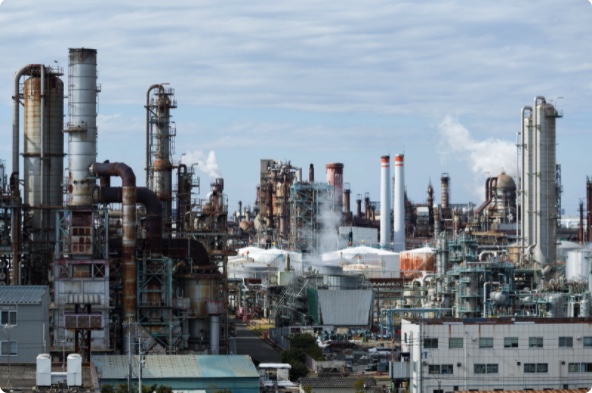
This is not a rounding error. It is the core of Brookfield’s business model. As of 2023, the firm was invested in at least 215 fossil fuel assets across 31 portfolio companies, including oil and gas extraction, liquefied natural gas terminals, pipelines, coal-fired power plants and one of the world’s largest tanker fleets. Its gas pipelines in the United Arab Emirates alone emitted 9.5 million tons per year, an amount equivalent to burning more than 10 billion pounds of coal. Oaktree-backed companies include some of the top methane polluters in North America.
Our long-term tracking shows that these issues are persistent. In both the 2022 and 2024 Private Equity Climate Risks Scorecards, Brookfield received “D” grades for failing to align its portfolios with basic climate, disclosure and transition standards. Despite being invested in some renewables, Brookfield, under Carney’s leadership, still expanded its dirty fossil fuel portfolio in the shadows.
As prime minister, Carney has reopened the door to the type of infrastructure experts say is incompatible with a 1.5 degree world. His government has placed the proposed Ksi Lisims liquefied natural gas project on a fast-track list, signaling strong federal support for what would become one of Canada’s largest export terminals.
He also “lifted a cap on emissions from Alberta’s oil and gas sector, exempted the province from federal regulations to phase out the use of fossil fuels for electrical generation and postponed a deadline for substantially reducing leaks of methane.” This is not the climate leadership Carney built his global reputation on, and it aligns far more closely with the fossil-heavy portfolio Brookfield and Oaktree still hold.
The prime minister continues to describe Canada’s energy transition as both inevitable and economically essential. But those assurances collide with years of decisions, investments, omissions and policy rollbacks that point in the opposite direction.
Carney is correct about one thing: Canada is blessed with enormous resources and has a critical role to play in the global energy transition. But leadership requires accountability. If the prime minister wants to be seen as a legitimate climate leader, he will have to prove it. Canada needs policies that finally address the scale of the crisis his own private equity firm helped cause.