PE emissions rival major countries amid data center boom
September 15, 2026
Private equity firms’ emissions rank fifth globally, new analysis finds
Most comprehensive scorecard to date maps more than 1,050 fossil fuel assets and finds oil and gas funds lost money after inflation
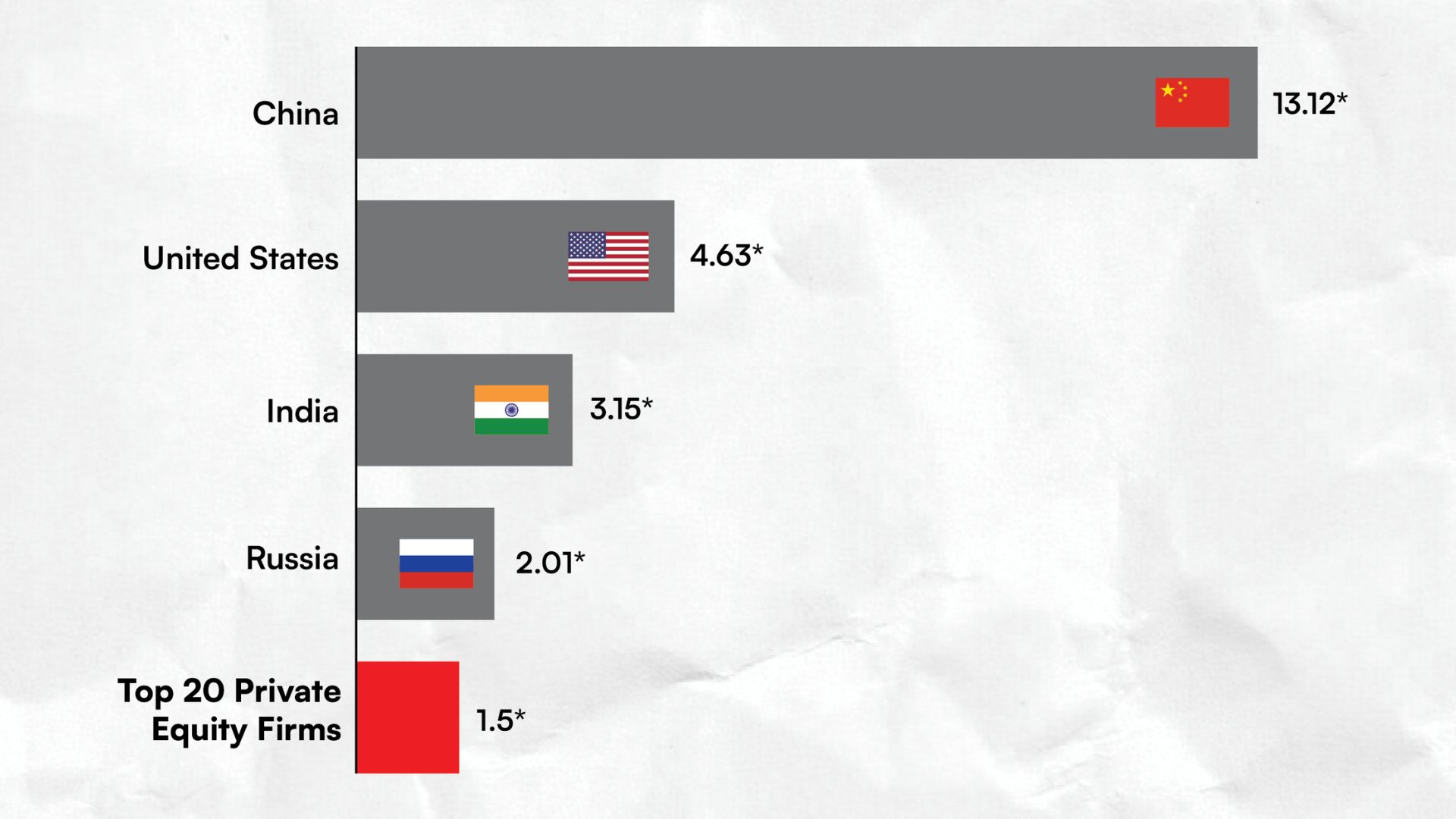
New York, NY — The energy portfolios of 20 major private equity firms produce an estimated 1.5 gigatons of greenhouse gas emissions annually, according to the 2026 Private Equity Climate Risks Scorecard released today. Compared with countries’ fossil fuel emissions, the firms’ combined footprint would rank fifth globally, behind only China, the United States, India, and Russia.
Produced by the Private Equity Stakeholder Project (PESP), Americans for Financial Reform Education Fund (AFREF), and Global Energy Monitor (GEM), the third edition of the scorecard examines the energy holdings, estimated emissions, climate policies, transition plans, environmental justice commitments, and political spending of 20 firms managing a combined $7.3 trillion in assets. The 2026 analysis significantly expands the scope of previous editions, adding oil and gas pipelines, LNG tankers, coal terminals, and oil- and gas-fired power generation to provide a more comprehensive picture of private equity’s fossil fuel footprint.
The findings come weeks after July became the hottest month recorded in the contiguous United States since recordkeeping began in 1895, and as the Trump administration eliminates federal limits on greenhouse gas emissions from coal- and gas-fired power plants. As the effects of climate change become harder to ignore, many of the financial actors behind the emissions remain largely out of public view. Private equity firms hold fossil fuel assets through complex and often opaque ownership structures, making it difficult for the public, investors, and regulators to determine who controls and profits from the infrastructure contributing to climate change.
The scorecard is endorsed by 21 organizations working on climate, environmental justice, financial accountability, and consumer issues.
Key findings:
- A fossil fuel footprint spanning more than 1,050 assets: The firms back at least 244 energy companies operating more than 250 oil and gas fields, 15,000 miles of pipelines, 35 LNG terminals, 13 coal terminals, dozens of LNG tankers, and hundreds of fossil fuel power plants.
- An interactive map of private equity’s energy holdings: The accompanying global asset map allows users to examine fossil fuel infrastructure by private equity firm, portfolio company, asset type, and location as of June 2026.
- Growing exposure to the data center boom: PE firms back nearly half of the top 25 U.S. data center companies, and PE investment in U.S. data centers reached $45.7 billion in 2025, about 72% of total investment in the sector. Some firms are positioned to profit from data centers as well as the utilities, power plants, pipelines, and other infrastructure needed to supply their electricity.
- Substantial health consequences: In the United States alone, air pollution from private equity-backed extraction, coal plants, and LNG infrastructure is linked to at least 1,000 premature deaths, 1,400 additional emergency room visits, 584,000 instances of asthma symptoms, 3,700 cases of asthma onset, and 27,000 lost workdays each year.
- Weak performance from completed oil and gas funds: Investors contributed $190.4 billion to 145 private equity oil and gas funds that have largely completed their investment lifecycles and received $192.9 billion back. The median fund returned only 2% more than investors contributed. After accounting for inflation, investors lost money on average.
“These investments are producing emissions on the scale of a major country, along with serious health and climate costs for the public,” said Amanda Mendoza, Senior Research and Campaign Coordinator at PESP. “The financial results make the situation even harder to justify. Many of these oil and gas funds have failed to generate strong returns for the pensions and other investors financing them, while private equity firms continue collecting fees. Communities and pension beneficiaries carry the costs, and the private equity firms still get paid.”
The interactive map provides an asset-level view of holdings as of June 2026 that are often difficult to identify through public disclosures. It shows the locations of private equity-backed extraction projects, power plants, pipelines, terminals, and other fossil fuel infrastructure around the world.
“The scorecard highlights a staggering exposure of private equity to fossil fuel assets. The data provide clear evidence to fund managers and investors to choose the level of risk they are comfortable with in this rapidly changing climate,” added Alex Hurley, Project Manager at GEM.
“Private equity firms are prioritizing short-term profits to line their pockets while driving up the cost of living for everyone else,” said Dustin Duong, Research Associate at AFREF. “Instead of decreasing their level of exposure to fossil fuels, the private equity industry is doubling down on data centers and dirty energy to raise prices while leaving everyday people and the climate to pay the consequences.”
The scorecard also grades firms on their current energy portfolios and policies. None of the 20 firms received an A. TPG, EQT, and Apollo received the highest grades awarded, each earning a B.
Among the industry’s largest firms:
- Blackstone received a C.
- BlackRock received a C.
- Brookfield received a C.
- KKR received a D.
- Carlyle received a D.
The report calls on private equity firms to disclose their fossil fuel holdings and emissions, adopt science-based climate targets, publish portfolio-wide transition plans, address environmental justice impacts, and provide greater transparency around political spending and climate lobbying. It also calls on institutional investors and regulators to require stronger disclosure and accountability from private fund managers.
The full 2026 Private Equity Climate Risks Scorecard is available at https://peclimaterisks.org/2026-scorecard
The 2026 Private Equity Climate Risks Scorecard is endorsed by:
ACRE-BCG, Bank.Green, Carrizo Comecrudo Tribe, Coastal Watch Association, CURE, Divest Oregon, Earthworks, Food & Water Watch, Green America, Greenpeace, Gulf Finance Hub, LINGO, LittleSis, Majority Action, New Energy Economy, Public Citizen, Rainforest Action Network, Shift: Action for Pension Wealth & Planet Health (a project of Makeway), Sierra Club, Stand.earth, and Urgewald.