Case studies: The financial fallout of poor labor practices
March 5, 2026
A company’s workforce is a key driver of its success, and failures to manage labor appropriately can create risks. In fact, poor labor practices can be an early indicator of operational failures. The following examples illustrate the long-term material impacts on investors when private equity firms fail to ensure fair labor practices.
Packers Sanitation
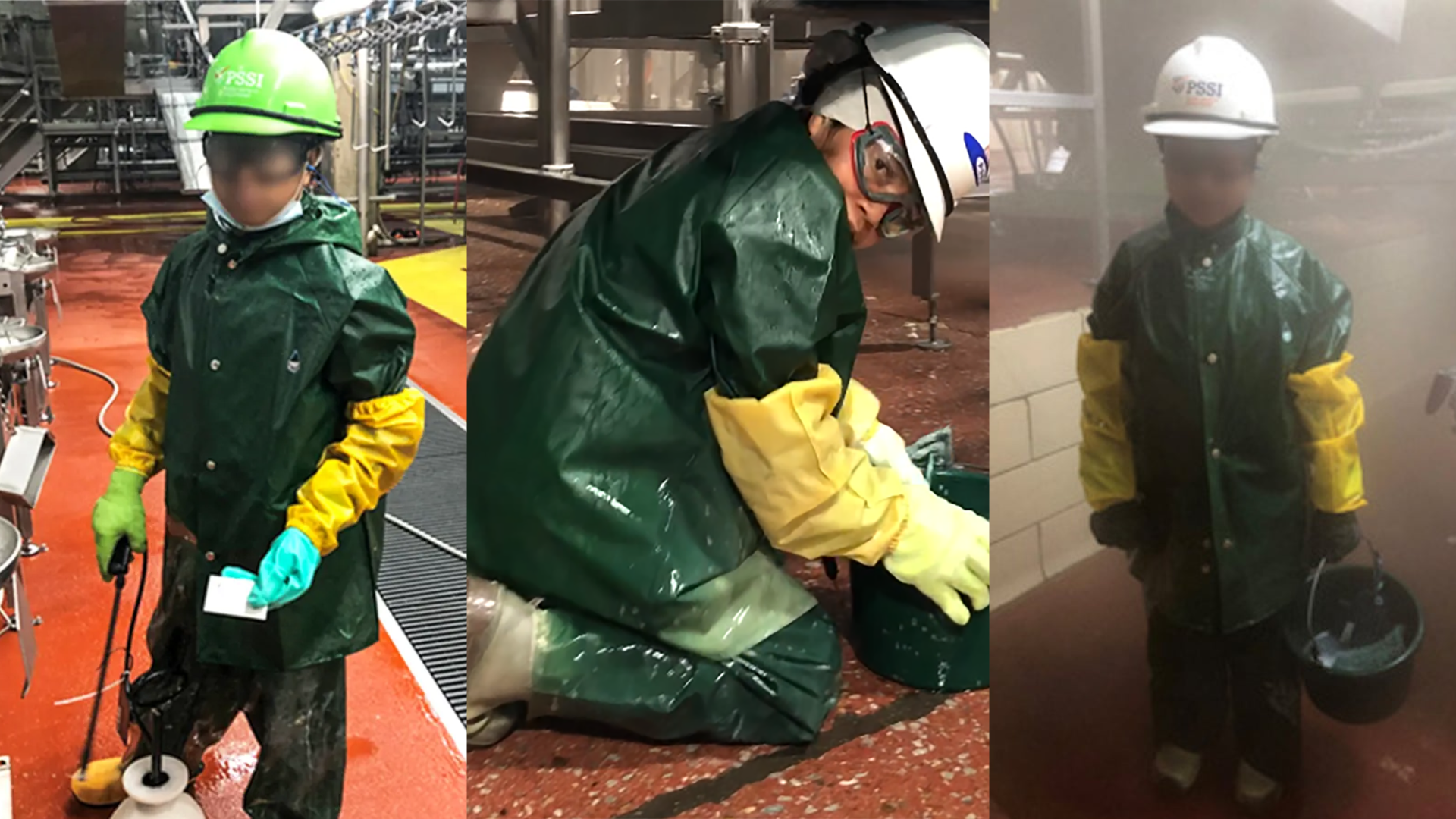
After a child labor scandal at Blackstone-owned Packers Sanitation (PSSI) erupted in 2022, the company struggled with lost business and looming debt, ultimately handing the business over to lenders three years after the allegations came to light.
Children were found with caustic chemical burns and injuries from cleaning head splitters and other meat processing equipment, prompting regulators to accuse slaughterhouse sanitation company PSSI of “oppressive child labor” in late 2022. PSSI settled with the US Department of Labor in February 2023, paying a $1.5 million penalty after findings that over 100 children – some as young as 13 – were employed in 13 facilities across eight states.
Private equity giant Blackstone had acquired PSSI in 2018, and in the years after the takeover there were indications the company was putting profits over worker safety. The DOL investigation spurred extensive media coverage, including a 2023 60 Minutes segment that found “systemic failures” at PSSI.
Several of Blackstone’s largest investors expressed concern about the child labor, including CalPERS and CalSTRS. In March 2023, the New York State Comptroller sent Blackstone a letter saying,
“The alleged practices are abhorrent and could imperil the reputation and financial success of PSSI.”
Indeed, PSSI was losing business in the spring of 2023, including contracts at meat processing facilities for Cargill, Tyson Foods, and JBS. In May of 2023, Moody’s downgraded the company’s credit rating, and again in November saying, “The ability to manage compliance and labor related risk has implications on the company’s earnings.” A year later, in October 2024, Moody’s issued another downgrade due to PSSI’s “unsustainable debt load.”
In January of 2025, PSSI rebranded as Fortrex, still backed by Blackstone. But the company’s struggles continued, and S&P reported a 14.5 percent year over year revenue drop in the 2nd quarter of 2025, “with the ongoing fallout from the Department of Labor incident.”
By October, Fortrex missed a debt payment and entered restructuring talks with its lenders. A distressed debt restructure proposal in November 2025 offered a chance at stabilizing, but S&P noted “lost business has been a persistent challenge.”
However, in December 2025, Fortrex had completed an out-of-court restructuring and lenders took control of the equity, meaning Blackstone’s Core Equity Partners fund investors lost out. S&P said the change in ownership “could aid Fortrex in moving beyond the Department of Labor incident.”
Packers Sanitation Timeline 2018 – 2025
Hearthside
Hearthside Food Solutions, which makes snacks, cereals, and baked goods for various brands at dozens of facilities, showed a pattern of health and safety violations before becoming embroiled in a child labor scandal. The company filed for bankruptcy less than two years after its use of child labor came to light and lenders subsequently took over.
Hearthside was acquired by private equity firms Charlesbank Capital and Partners Group in 2018. In April 2022, the US Department of Labor cited Hearthside “after a maintenance employee suffered the amputation of one finger and the partial amputation of another,” announcing that Hearthside had
“violated federal safety procedures for the 20th time in 5 years.”
In June 2022, Moody’s downgraded its outlook on Hearthside to ‘negative’ citing the need for an “operational turnaround” to reduce the debt load and employee turnover.
A New York Times investigation in February 2023 on unlawful child labor interviewed several minors who worked in Hearthside facilities, some hired through subcontractors, and often working night shifts under dangerous conditions. In May 2023, Moody’s downgraded Hearthside and gave it a ‘negative’ outlook, citing inflation, supply chain issues and labor problems. Moody’s wrote, “product quality and reputational risk are important for Hearthside to sustain its customer base and revenue. Human capital risk is evidenced by the company’s current Department of Labor investigation regarding alleged employees working at its plants under the age of 18.” The company paid $4.5 million to settle child labor charges in late 2024, then landed in bankruptcy.
Hearthsidefiled for bankruptcy in November 2024 after struggling to refinance its debt, with Bloomberg noting the “snack maker came under scrutiny after report of child labor.” The company shed $1.9 billion in debt through the restructuring, and the company’s lendersassumed majority ownership in the bankruptcy process, meaning investors in the Charlesbank and Partners Group funds would have lost out.
Post bankruptcy, Hearthside rebrandedas Maker’s Pride, which as of March 2025 became a portfolio company of Apollo and Oaktree. Labor issues are ongoing in at least one plant under the current private equity owners, with a labor agency judge ruling in September 2025 the manufacturer must hold a new election for union representation in London, KY and rehire four employees, after multiple violations of federal law were found.
Hearthside Timeline 2018 – 2025