Instar targeted by regulators for labor rights abuses of immigrants, cashing in on ICE deportations
September 9, 2026
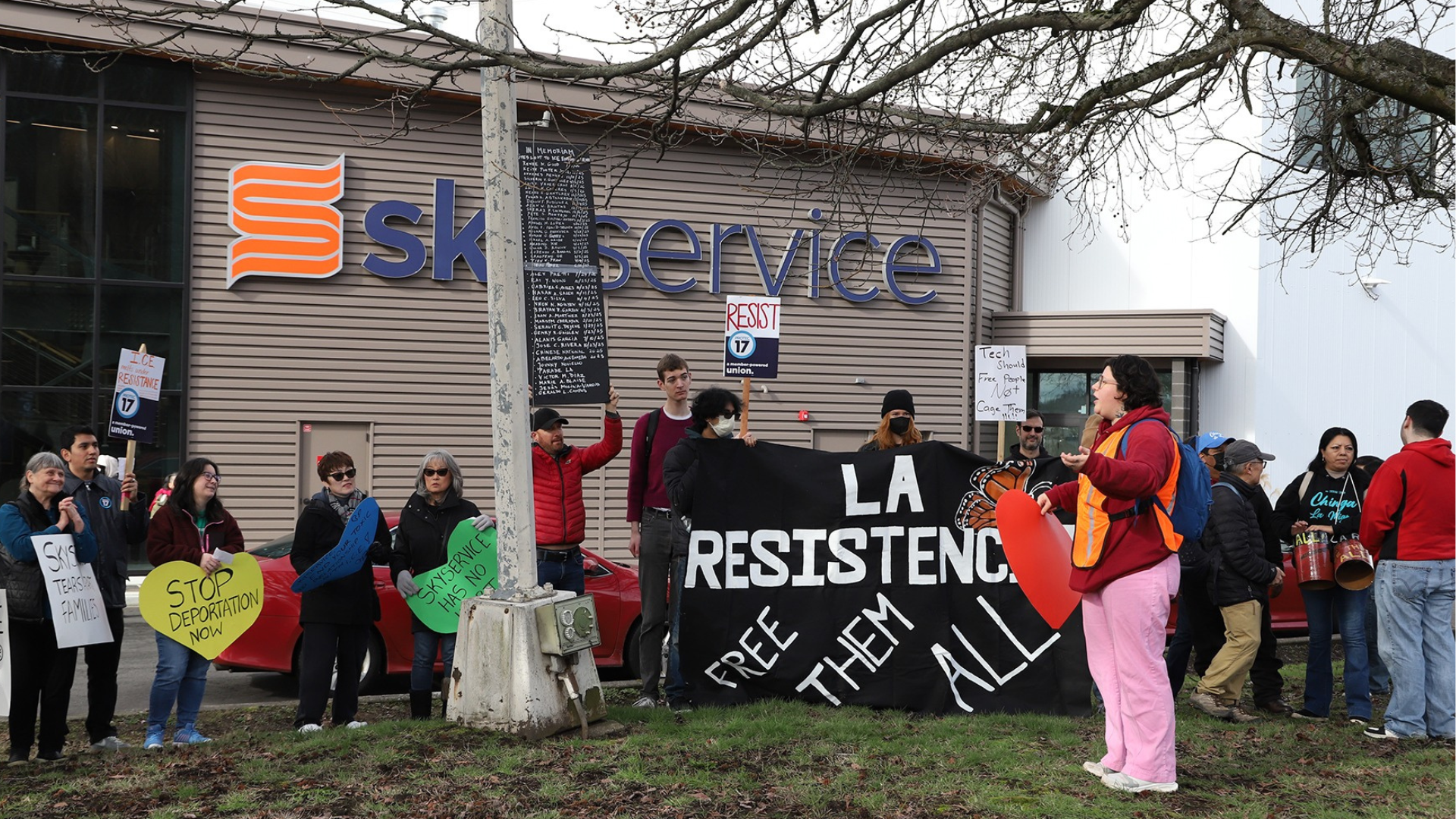
Photo courtesy of La Resistencia NW
King County, Washington recently hired an employee to ensure that ICE flights out of Seattle’s Boeing Field/King County Airport (BFI) comply with safety regulations, after regular controversy plaguedcompaniesassociated with these flights, including Instar-owned Skyservice. In 2019, County executives attempted to ban ICE deportation flights from the airport, but lost a legal battle that allowed the flights to continue. SkyService has operated ICE flights about every other day in recent months and about once a week going back to 2024, according to the King County website. The company conducted at least ten flights with over 400 passengers in August 2026. Local activists have continued to press local officials to scrutinize these flights and their private contractors such as Skyservice, accusing these flights of inhumane conditions. The newly hired King County employee is part of the ongoing effort of local elected officials to increase regulation of conditions on these flights.
Skyservice is a Canada-based provider of aviation services, boasting “One of Canada’s largest managed and charter fleets.” Instar Asset Management, a Toronto based private equity firm, acquired the company in 2017 and has since acquired other aviation service providers in the USandCanada.
Instar faces controversies across portfolio companies
The Instar Environmental, Social, Governance (ESG) policy highlights human rights, health and safety, and community impacts, while committing the firm to “active portfolio management and deep engagement with stakeholders” as part of their strategy to create “long-term sustainable value for our investors.” The firm highlights its membership in the UN-supported Principles for Responsible Investment.
These public pronouncements have not stopped Instar from involvement in controversies in recent years and has faced accusations of cashing in on abuses of immigrant workers at a farm it owns in Washington State, as well as through its contracts with the federal government to deport similarly situated immigrant workers.
The United Farm Worker (UFW) union has been supporting farmworkers organizing at Instar-owned Windmill Farms in Sunnyside, Washington who have accused the farm of labor rights abuses and anti-union firings, retaliating against workers who have sought to unionize and improve working conditions. In December 2024, the union called for a boycott of Windmill Farms products until the company agrees to negotiate improved working conditions with the union.
Accusations of labor right abuses at Windmill are not only coming from labor rights activists. Since Instar’s acquisition of the farm in 2023, it has been fined by the US Department of Labor for unpaid wages and other federal violations, settled a discrimination lawsuit with the WA Attorney General for $3.4 million, and has been sued by numerous current and former employees for alleged federal and state violations. The farm is the subject of a growing boycott of the farm’s products by the United Farm Workers union, which has been endorsed by labor, religious, and civic groups across the US and Canada.
In October 2024, PESP and the UFW wrote to the Principles for Responsible Investment requesting that Instar be delisted, outlining the ways that Instar has violated their own ESG policies by refusing to engage with stakeholders or proactively managing labor related ESG risks at Windmill Farms.
Investors take notice
Private equity firms often justify extreme efforts to cut costs and increase profits with outsized returns; however, private equity firms, including Instar, are increasingly facing frustration from investors over poor performance. As multiplestate pension funds announce poor performance in their private equity portfolios, private equity firms such as Instar Asset Management may need to explain why poor ESG practices can often connect to poor performance for investors. The Texas Municipal Retirement System (TMRS) reports poor returns from two Instar investments. The TMRS website’s most recent report shows the two investments providing a -7.51% and -.14% IRR, respectively. After nearly seven years, the fund shows a loss of over $11 million.
While it appears that the firm abandoned its 2021 effort to raise a third infrastructure fund, it morerecentlybegan fundraising again. As Instar attempts to revitalize fundraising for its third infrastructure fund, investors should request detailed information about the cause of the poor performance of the previous fund, what is happening at Windmill Farms, how continued controversy from operating ICE flights has affected SkyService, and why the firm appears to have violatedits own ESG policies.