

PESP opposes DOL’s proposed 401(k) private markets rule
June 3, 2026
As pensions pull back from private equity, PESP and lawmakers raise concerns about fees, liquidity, and weakened investor protections
The Private Equity Stakeholder Project (PESP) has submitted a formal comment letter to the Department of Labor (DOL) opposing the Trump administration’s proposed rule expanding private equity and private credit investments in 401(k) retirement plans. The proposal comes as the administration pushes to open retirement accounts to private market investments despite growing concerns around fees, liquidity, transparency, and recent underperformance compared with public stock market indexes.
PESP’s comment argues that the proposal could weaken long-standing fiduciary protections for retirement savers while seeking to bail out the struggling private equity and private credit industries with workers’ retirement savings. The rule as proposed would make it significantly harder for retirement savers to challenge risky investments, excessive fees, or illiquid products even if those investments later prove harmful to workers’ retirement security.
In a statement on the proposed rule, PESP Executive Director Jim Baker warned that “private equity firms should not get a free pass to loot workers’ 401(k) retirement savings,” adding that the Department of Labor should hold private equity to the same disclosure and transparency standards expected of publicly traded stocks, mutual funds, and ETFs.
One of the central arguments used by supporters of the rule is that allowing private equity into 401(k)s would make retirement investing more like the model used by large institutional investors and public pension funds. But that comparison increasingly overlooks how many sophisticated institutional investors have been reducing their allocations to private equity.
Several major pension systems and institutional investors have recently moved to reduce or reassess private market exposure amid concerns about weaker performance, liquidity constraints, and high fees. The Alaska Permanent Fund approved a pullback from private markets after its chief investment officer warned of “flashing red” signals across the asset class and suggested private equity’s “golden era” may be over. In New Jersey, the state pension system recently reduced its target allocations for private equity and real estate.
These moves reflect broader concerns emerging across institutional investors as private equity firms struggle to exit investments and distributions to investors remain depressed. Firms are currently sitting on an estimated 32,000 unsold companies worth roughly $3.8 trillion, while holding periods for portfolio companies have lengthened as firms struggle to exit investments in a slower deal environment. PESP warned in its comment letter that opening 401(k)s to private markets at the same time large institutional investors are becoming more cautious raises important questions about risk, performance, and whether retirement savers are being asked to enter an asset class at a particularly uncertain moment.
Concerns about the proposal are also gaining traction among lawmakers overseeing labor, retirement, and financial policy. In their comment letter to the Department of Labor, Senate and House Democrats on the HELP, Banking, Workforce, and Education committees urged the department to withdraw the proposal, warning that it would weaken long-standing investor protections while exposing retirement savers to riskier and more expensive investments. The lawmakers cited PESP’s recent analysis showing that private equity funds marketed to retail investors have significantly underperformed public stock market indexes while charging substantially higher fees.
PESP’s research found that some private equity evergreen funds delivered roughly half the gains of public equities over the past three years. Some funds charged annual fees approaching 4 to 5 percent, compared with a fraction of a percent for basic stock index funds.
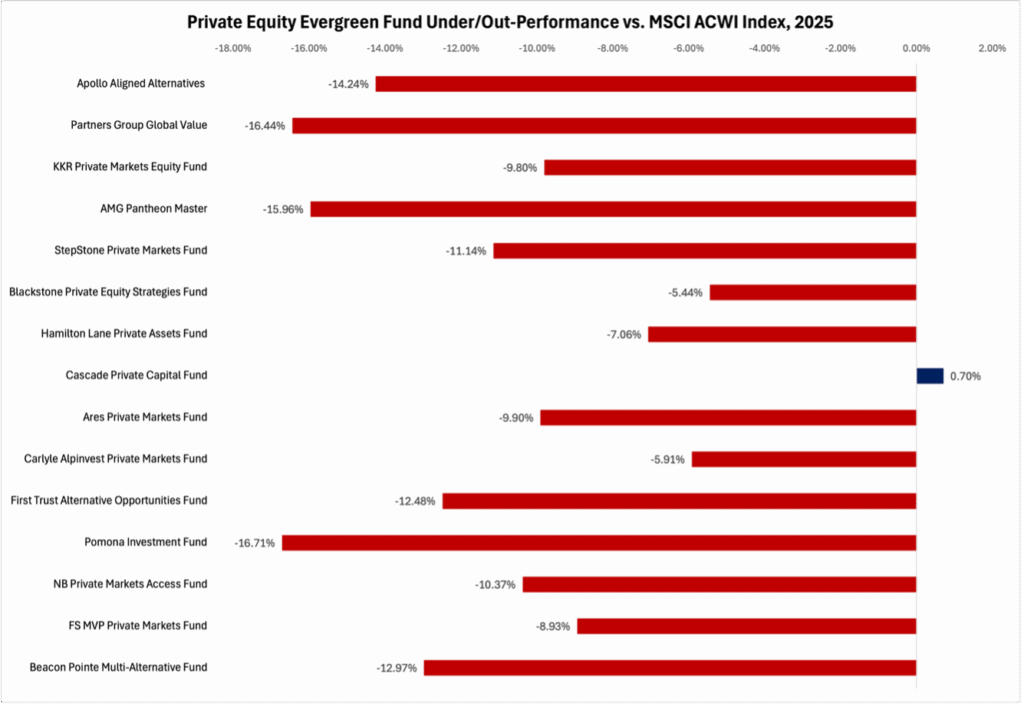
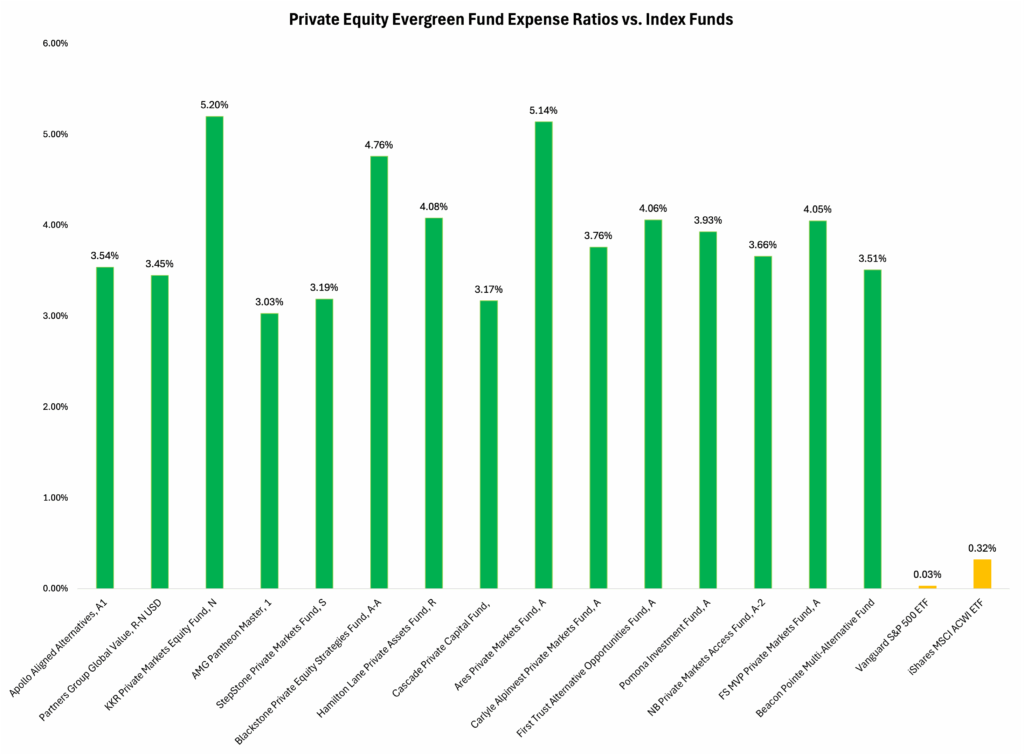
Liquidity concerns have also become increasingly difficult to ignore as private market firms expand products targeted at individual investors. Several large private credit managers, including Blue Owl, BlackRock, Apollo, Ares, Cliffwater, and Morgan Stanley, have recently restricted investor withdrawals after redemption requests surged, underscoring the reality that private market investments can become difficult to exit during periods of stress. For large institutional investors with long time horizons, illiquidity can often be managed. For individual retirement savers who may need access to their 401(k) savings during periods of economic hardship, the risks are much more immediate.
Those concerns are not limited to outside critics. Apollo Global Management co-founder Joshua Harris recently warned in a Reuters interview that expanding private markets to retirement savers is “not going to end well,” citing concerns about liquidity and whether many investors fully understand these products. Last year, a record share of workers in Vanguard-administered plans took hardship withdrawals from their retirement accounts to cover expenses including medical bills and housing costs, highlighting how many Americans already rely on their 401(k)s as a financial safety net during emergencies.
PESP has also noted that additional regulatory developments could further weaken oversight of private markets just as access expands. The Securities and Exchange Commission has proposed changes to Form PF, a key private fund risk-reporting framework used to monitor leverage, liquidity, and systemic risk in private funds. At the same time, private equity lobbying groups are pushing the SEC to weaken restrictions on cross-trading between funds, transactions that could allow firms to move assets between investment vehicles with less scrutiny.
Taken together, PESP argues these developments could reduce transparency into private market investments while increasing the risk that workers’ retirement savings is used to bail out struggling private equity and private credit firms. The organization warned that private market access to workers’ 401K retirement savings while simultaneously weakening oversight could expose workers to risks that even many sophisticated institutional investors are increasingly questioning.
Read PESP’s full comment letter here: https://pestakeholder.org/wp-content/uploads/2026/06/5-26-26-Comment-Letter-re-DoL-401k-Proposal-PESP-1.pdf
Read PESP’s analysis on private equity underperformance here: https://pestakeholder.org/reports/private-equity-underperforms/