Private equity continues disproportionate role in 2026 bankruptcies
August 3, 2026
Since 2024, PESP has tracked and analyzed corporate bankruptcies, identifying the disproportionate role that private equity-owned firms have played in bankruptcy filings. This trend continued in the first half of 2026: although private equity-backed firms make up only about 7% of the US economy, private equity backed firms made up 50% of the largest corporate bankruptcies with over $1 billion in liabilities, 44% of large bankruptcies with liabilities over $500 million, and 15% of all corporate bankruptcies with over $10 million in liabilities.
Private equity managers generally prefer short-term profits and rapid value extraction over the long-term stability of the companies in their portfolios. Private equity managers finance the acquisition of companies using debt secured by the companies they are acquiring rather than taking on the debt themselves. This saddles private equity-owned companies with substantial debt, often draining resources that could otherwise be invested in innovation, workforce development, or adapting to market changes. Instead, companies under private equity ownership must channel much of their revenue toward servicing this debt, leaving them more vulnerable to financial distress and bankruptcy.
Private equity’s expansion into nearly every sector of the U.S. economy has far-reaching consequences. The heightened risk of bankruptcy threatens job security for workers, disrupts services for consumers, and creates ripple effects across local economies. Understanding private equity’s growth and strategies remains crucial for policymakers, industry stakeholders, and the public as they grapple with an increasingly privatized landscape.
A few examples of 2026 bankruptcies across industries serve as examples of the connection between private equity financial strategies and the disproportionate role they play in US bankruptcies:
Two bankruptcies from the first half of 2026 highlight the risk of using large debt loads to roll up smaller firms into one consolidated firm.
Pretium Packaging, a plastic packaging manufacturer, has a long history of private equity ownership and private-equity-driven acquisition sprees, dating back multiple decades. In 2020, Clearlake Capital acquired Pretium Packaging and continued a debt-fueled buying spree with three more acquisitions of smaller plastics manufacturers. The strategy of debt fueled acquisitions ran into problems in the post-COVID cool off when a sales bump faded and as inflation set in. By 2022, lower sales and excess production capacity led the company to shutter five plants, plus another in 2025, laying off hundreds of workers. In late 2025, the firm received a ratings downgrade by Moody’s because of a missed interest payment on one of its loans. The credit ratings firm stated at the time that “the outlook is negative” for Pretium Packaging. The firm filed for bankruptcy in early 2026, using the process to cancel a debt load of $900 million. While many companies face challenges brought on by consumer changes, large private-equity-driven debt loads can often make such challenges insurmountable, leading to closures, layoffs, and bankruptcies where lenders and suppliers are forced to take losses.
Multi-Color, a manufacturer of packaging and labeling products for commercial clients, was acquired by private equity firm Clayton Dubilier & Rice (CD&R) in 2021. The company’s new owners went on a debt-fueled buying spree of at least eight companies in the next three years. After piling up $5.9 billion in debt, the company was not able to handle a post-COVID loss in revenue and filed for bankruptcy in January 2026. Multi-Color ultimately eliminated $3.9 billion in debt through the bankruptcy process, stiffing creditors and suppliers and reducing annual interest payments by more than $330 million.
The bankruptcy case made headlines as CD&R used new and creative strategies in bankruptcy court. Some creditors opposed the unusual attempt by CD&R to retain an equity stake in the company after the bankruptcy proceeding. The company also sought to “venue shop” by using a non-operating, Ohio-based subsidiary to open a $1 million bank account in New Jersey to establish a basis to file the case in the New Jersey bankruptcy court. The bankruptcy judge stated that while this did not sit right with him or multiple creditors, it was legal and allowed the full case to go through in the New Jersey bankruptcy court, which has a reputation as a “debtor-friendly venue.”
Two large retail bankruptcies in early 2026 highlight how huge debt loads piled on by private equity owners can leave companies unable to handle economic changes, causing the firms to buckle under the weight of large interest payments.
Saks Global, under control of private equity firm NRDC, took on large debt loads to merge with Neiman Marcus in a December 2024 deal worth $2.7 billion. According to Reuters, the deal “burdened Saks with debt at a time when global luxury sales were slowing, complicating an already difficult turnaround.”
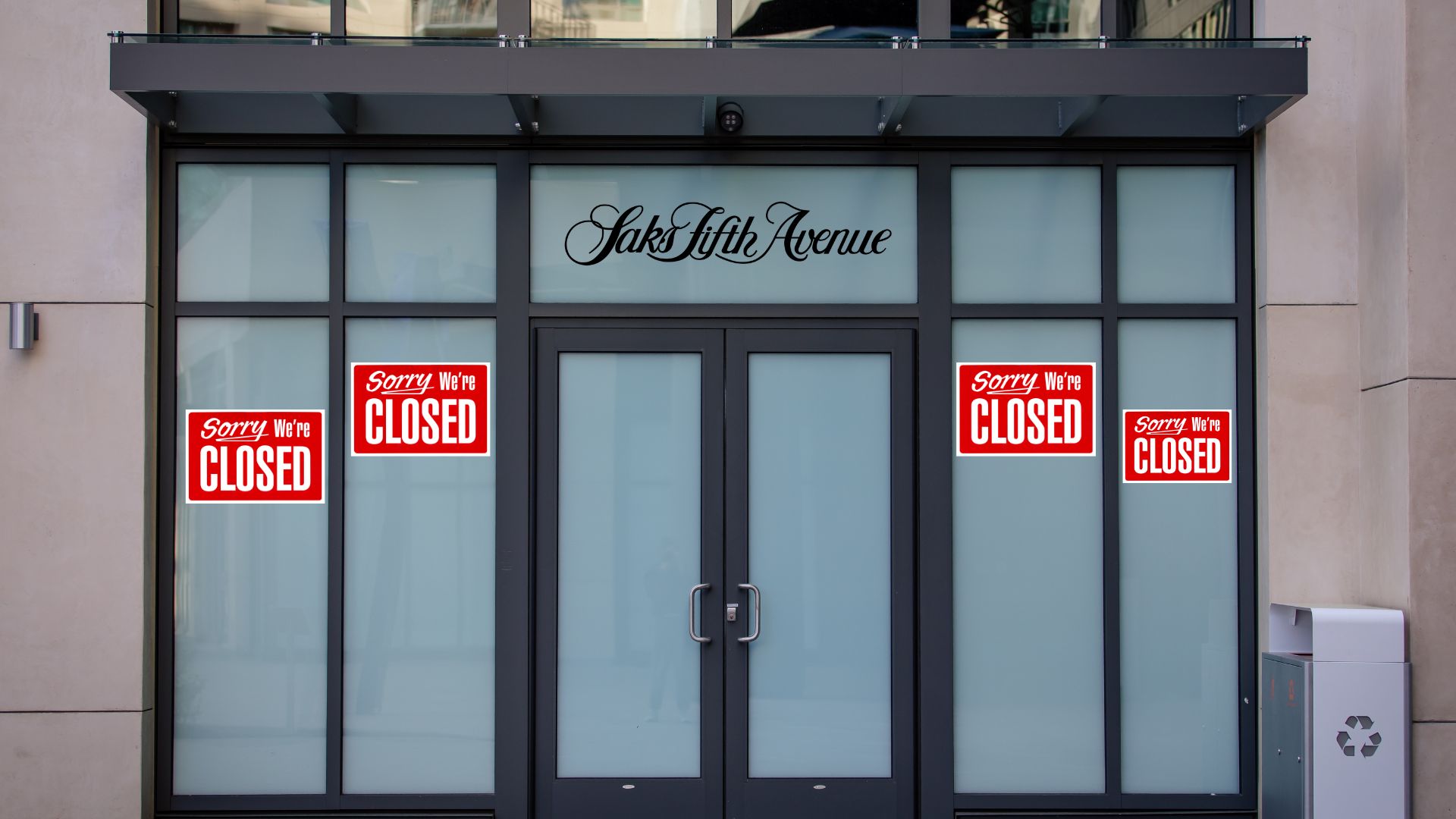
Within the first two weeks of 2026, Saks filed for bankruptcy with over $3 billion in debt, stiffing dozens of suppliers. Shortly after the bankruptcy, the company announced it would close most stores and all e-commerce.
A January 2026 Wall Street Journal article highlighted the downfall of the famed company, citing the many risky private equity-backed deals that led to a spiraling debt level with huge interest payments the company could not manage. The article also highlights the regular tactics that private equity executives use to cash in on the real estate owned by portfolio companies.
Richard Baker, CEO and founder of private equity firm NRDC, benefitted financially, even as some of his investments ended in bankruptcy:
“In 2005, he formed a private-equity firm to snap up retailers with valuable real estate. A memo he wrote that year listed his targets: Lord & Taylor, Canadian chain Hudson’s Bay, Saks, Germany’s Galeria Kaufhof, and Neiman Marcus. He would go on to buy them all. Each eventually filed for bankruptcy—though not all on his watch. Even though the companies failed, Baker often made money on the real estate.”
In June 2026, the company announced it would come out of bankruptcy under a new name: Exemplar Luxury Group (ELG). Reducing its debt load by nearly 75% in the bankruptcy, ELG’s reconstituted board will include two representatives each from investment firms Pentwater Capital Management and Bracebridge Capital. In total, Saks closed 74 locations as a result of the bankruptcy, laying off close to 2,000 employees.
Eddie Bauer, the outdoor apparel retail company, filed for bankruptcy in February with $1.7 billion in debt and closed its Seattle headquarters and 174 stores. Eddie Bauer has been through a series of private equity buyouts and two previous bankruptcies over the past 15 years. The most recent leveraged buyout was in 2021 under Authentic Brands Group, which is backed by private equity firms CVC Capital, Leonard Green & Partners, and BlackRock.
Authentic Brands Group, Eddie Bauer’s most recent private equity backed owner, also took retail giant Forever 21 into bankruptcy last year after acquiring the retail giant in 2020. As part of the liquidation process, Forever 21 closed 355 stores and laid off approximately 9,200 employees across its U.S. locations.
Private equity’s attempt to use the bankruptcy system to avoid liability for violations of patients’ rights collapsed recently at YesCare, a provider of healthcare services in prisons with a long history of private equity ownership. Under YesCare’s most recent private equity owner, Perigrove Capital, the company filed for bankruptcy in 2023, in an effort to avoid liability for hundreds of wrongful death and malpractice lawsuits. PESP wrote about this “Texas Two Step” in 2024, in which its owners “split [YesCare predecessor] Corizon into two entities. The viable operating business CHS TX was later acquired by YesCare. Tehum Care Services, which inherited Corizon’s lawsuits, was placed under chapter 11 in February 2023.” As part of this deal, YesCare agreed to pay $50 million of the settlement over a 30-month period.
However, YesCare’s many cases of alleged violations of incarcerated people’s rights came back to haunt it, as the firm failed to make payments and additional claimants came forward with allegations of violations of their rights by YesCare and its predecessors. When dozens of cases were allowed to move forward and a judge awarded over $307 million to a claimant over violations of civil rights, the deal fell apart and YesCare stopped making payments and instead began to wind down operations and shutter the company in May 2026. To date, the company has given a layoff notice to 150 employees and thousands of others may also face layoffs. In the end, YesCare’s predecessor’s own actions that led to hundreds of lawsuits and numerous large verdicts and settlements imposed a significant financial burden on the company that it could not handle.