Private equity-backed midstream firms face record fines
January 30, 2026
Private equity-backed midstream companies facing regulatory setbacks and record fines
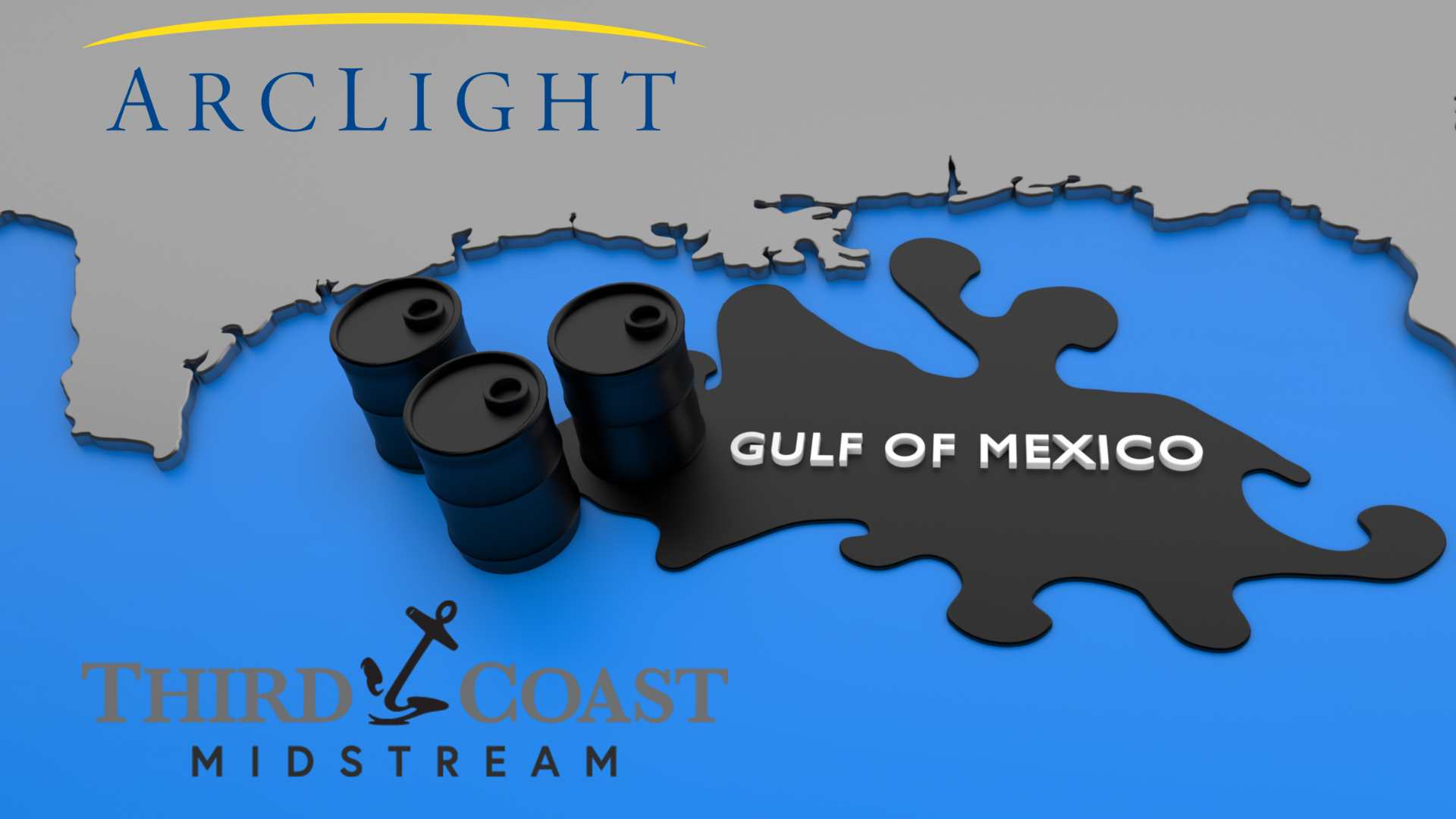
Two private equity-backed midstream companies operating in Louisiana faced recent financial and permitting challenges. The first company, Third Coast Midstream, a major U.S. oil and gas pipeline company backed by ArcLight and JP Morgan Chase, was hit with a record $9.6 million fine for the massive 1.1 million-gallon oil leak in the Gulf of Mexico in 2023. Shortly following the oil leak, despite the damage caused, the company refinanced and paid out millions to shareholders. The other private equity-backed midstream company, Commonwealth LNG, backed by Kimmeridge and Mubadala Energy, has faced major setbacks in obtaining the necessary permits to move forward with proposed building plans amid legal battles with the local community and environmental groups over environmental justice concerns, should the project move forward. Commonwealth LNG has had challenges obtaining authorization from the Federal Energy Regulatory Commission (FERC) and has seen its land use permit from the state of Louisiana granted, vacated, and then re-granted, and now faces a new legal challenge from local community and environmental groups.
It remains to be seen if these fines and regulatory delays will translate into financial risks for the investors in the private equity firms financially backing these harmful and costly projects. Investors should be wary of continuing to invest in firms that seek to continue harmful fossil fuel expansion.
ArcLight-backed Third Coast Midstream pays out shareholders $74 million after major oil pipeline leak
In January 2026, Third Coast Midstream was fined $9.6 million for a 1.1 million-gallon oil leak off the coast of Louisiana in the Gulf of Mexico in November 2023. Less than a year after the spill that was estimated to have caused $30 million in damage to local wildlife and the Gulf, the company raised debt capital financing to refinance its debt structure and pay out shareholders $74 million dollars.[1]
In a statement released by PESP shortly after the leak in 2023, PESP Executive Director Jim Baker said:
“The oil spill off the coast of Louisiana this week is just the latest example of the dangers of private equity’s increasing ownership of oil and gas assets in the United States. The private equity takeover of energy companies has led to high profits for these private companies and their executives while increasing the financial and environmental risks to the public. And this spill is just the latest example. Once again, state, local and federal resources will need to be deployed—at potentially huge cost to taxpayers—to clean up the mess of a private equity-owned energy asset.
The National Transportation Safety Board (NTSB) found that Third Coast failed to shut down the leaking pipeline for nearly 13 hours after the data first showed there was a problem. According to NTSB the leak was the result of damage to the pipeline from underwater landslides due to hurricanes that Third Coast failed to address. The NTSB estimated $30 million in damage to wildlife and the Gulf from the massive leak. While Third Coast faced some accountability for the oil spill, it remains to be seen how this ruling will impact ArcLight and its investors.
ArcLight remains steadfast in its commitment to financially back U.S. midstream companies despite backing Third Coast amid the major oil spill. As of November 2025, ArcLight backed 17 fossil fuel companies, including eight midstream companies alongside Third Coast. Last year, the firm acquired 25% interest in the Gulf Coast Express pipeline from Phillips 66 for $856 million, expanding the firm’s financial backing of fossil pipelines in the region.
Kimmeridge-backed Commonwealth LNG project continues to hit roadblocks
The proposed Commonwealth LNG project, a 9.5 Mtpa gas liquefaction and export terminal in the U.S. Gulf Coast near Cameron, Louisiana, backed by private equity firm Kimmeridge and Mubadala Energy, has faced ongoing permitting struggles amid litigation by local community and environmental groups and their continued opposition to the project.
Commonwealth LNG first received approval from FERC in late 2022, but due to lawsuits filed in 2023 by a coalition of environmental groups led by the Sierra Club and NRDC, which alleged that FERC arbitrarily concluded that the project poses no environmental justice concerns and failed to properly analyze alternatives, the U.S. Court of Appeals returned the approval of Commonwealth LNG back to FERC for reconsideration. After additional consideration of the environmental impacts of the proposed project, in June 2025, FERC issued a final order upholding the authorization of the project, citing that the benefits outweighed the costs. In August 2025, the Department of Energy (DOE) issued final authorization for Commonwealth LNG to export up to 1.21 billion cubic feet of LNG per day.
The project has also seen challenges with its land use permit from the state of Louisiana. Local community and environmental groups celebrated in October when the Louisiana Department of Energy and Natural Resources (LDENR) vacated Commonwealth LNG’s coastal use permit following a lawsuit filed by the Sierra Club, the Louisiana Bucket Brigade, and Turtle Island Network. The Louisiana state court found that state officials violated the state constitution when they failed to consider the environmental impacts of the project on the surrounding community when initially granting the permit. In response to the decision to vacate Commonwealth’s state land use permit, Eric Huber, Managing Attorney at Sierra Club, stated:
“We are heartened by the court’s ruling that LDENR’s refusal to consider the environmental justice impacts of the project violated the Louisiana Constitution. It is past time for LDENR to account for the true costs of its permits on Louisiana’s coastline and communities in terms of loss of wetlands and storm buffers. This is another in a series of permits by LDNR for the LNG build-out on the Gulf, including the permit for CP2 directly across Calcasieu Pass. We urge LDENR to stop its pro-forma permitting and carry out its mission to protect the public health and welfare of all Louisianans.”
On November 18th, 2025, the Louisiana Department of Conservation and Energy (formerly the Louisiana Department of Energy and Natural Resources) issued a new land use permit for the Commonwealth project, citing updated reasons and stating the benefits outweigh the negative impacts of the project. The agency reissued the permit without any additional environmental impact analysis, relying solely on prior analysis, which had previously been deemed insufficient by the Court of Appeals. The coalition of environmental groups led by Sierra Club swiftly filed a challenge to the new permit in the Louisiana state court. The new lawsuit alleges that the LDCE failed to provide proper public notice, allow public comments, or hold a hearing.
Despite continued challenges in moving the project forward, The Carlyle Group is evaluating a potential investment in Commonwealth LNG, Private Equity Insights reported.
Risky fossil fuel projects could increase financial risk for investors
Private equity firms continue to invest in fossil fuels, and in companies like Third Coast Midstream and Commonwealth LNG that are driving climate chaos The private equity industry has been slow to transition away from fossil fuels; there are signs of a new era of accountability approaching, with groundbreaking litigation alleging a major North American pension fund has failed to address climate risk and a landmark greenwashing ruling against a major oil company.
The investors, including public employees counting on their pensions, could be the ones paying the price if private equity firms continue to sink money into risky fossil fuel investments. Investors should decline further investments with private equity firms that have failed to transition their portfolios away from fossil fuels and into clean, renewable alternatives.
[1] Pitchbook reporting https://content.pitchbook.com/share/quick-link/profile/098dc404-d979-4344-aace-c82010d17020?hash=4812a295914672cd8017218dfc769afb5838a2ec5eb2e4a22ca8fc32b51e15b1 “Proceeds from the deal will be used to refinance $854 million of existing debt and fund a $74 million sponsor distribution, according to Moody’s.”