Tracking private equity layoffs in 2026
July 21, 2026
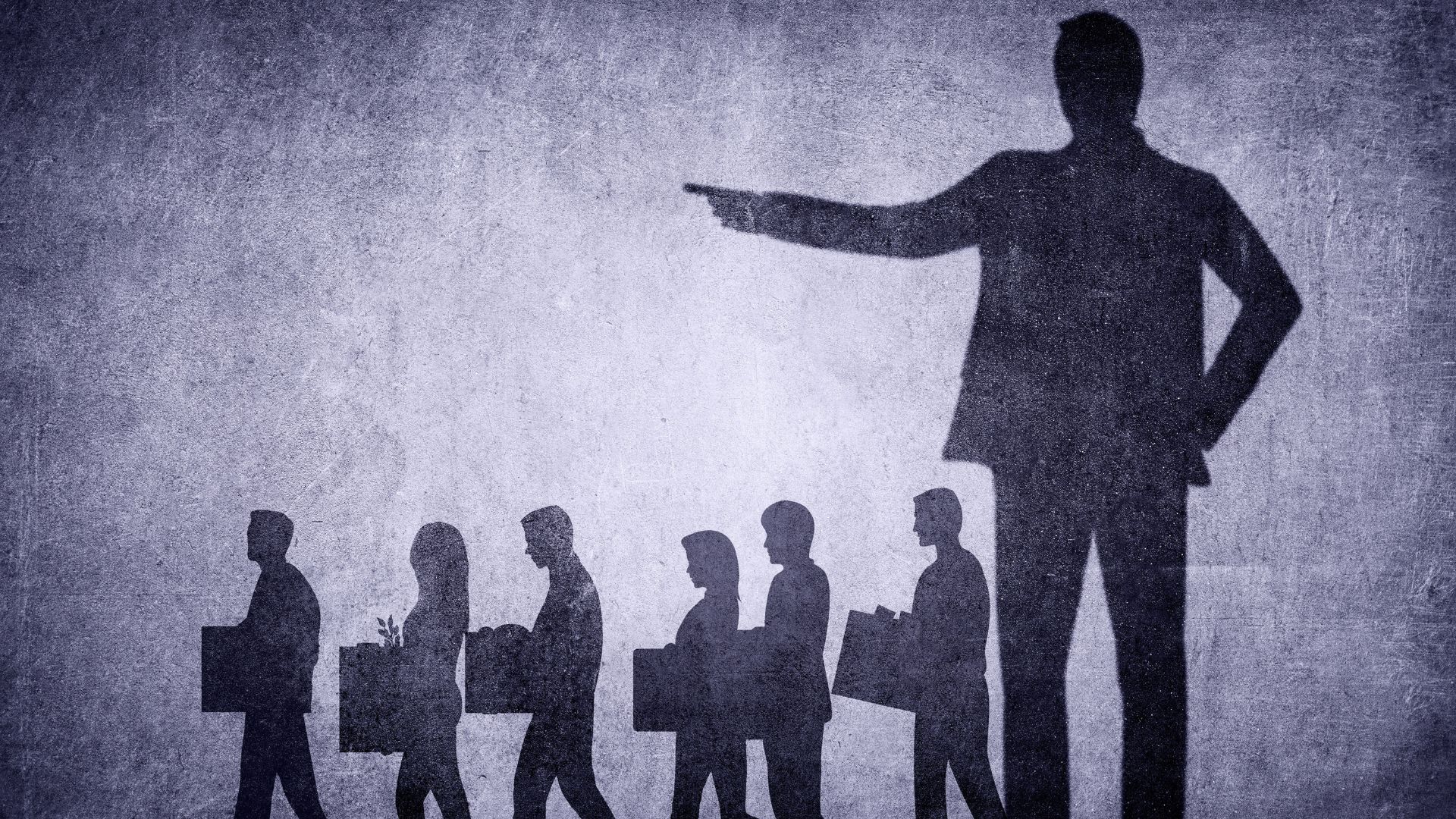
From January to May 15, 2026, more than 100 companies backed by private equity, venture capital, and other asset management firms notified labor departments about layoffs across the country, resulting in job losses for nearly 13,000 workers. This is likely an undercount, as the federal Worker Adjustment and Retraining Notification (WARN) Act only requires companies with over 100 employees to provide advance notice of mass layoffs or plant closings that will result in more than 50 lost jobs. Many states have implemented their own version of the WARN Act.
Using data from WARNTracker.com, PESP found that seventeen percent of companies that conducted layoffs during this time period were controlled by asset management firms. To generate returns for investors, asset managers aim to make a company more profitable by increasing efficiency (eliminating “unnecessary” positions), lowering costs (using cheaper products or labor), or reducing competition (consolidating the market through acquiring smaller companies). Many of these layoffs came as part of an acquisition or market consolidation – when combining two or more companies, there may be “redundancies” that get resolved through layoffs.
Several layoffs captured in the dataset occurred due to bankruptcies. One study found that companies acquired by private equity firms through leveraged buyouts were 10 times more likely than other companies to file for bankruptcy. The private equity model generally prefers short-term profits and rapid value extraction and can create risk for the long-term stability of the companies in their portfolios. Bankruptcies can often lead to store or job site closures and mass layoffs.
The following sections highlight various trends in 2026 layoffs at companies controlled by asset managers.
| Companies with more than 250 Layoffs | |||
| Company | Firm | # of Layoffs | Location |
| Ideal (Dayforce) | Thoma Bravo, Abu Dhabi Investment Authority | 1,083 | VA, DC |
| Walgreens | Sycamore Partners | 628 | TX, IL |
| Paramount Skydance Corporation | RedBird Capital Partners | 445 | NY |
| Albertsons | Cerberus Capital Management | 394 | TX, CA, DC |
| Panera | JAB, BDT | 280 | MD, OH, MA |
| Phillips 66 | Elliott Investment Management | 277 | CA |
| Resolute Forest Products | Kinterra Capital | 275 | AL |
| RESRG | Atlas Holdings | 266 | IN |
| Aerofarms | Palm Ventures | 260 | VA |
Manufacturing
Out of the 108 companies in the dataset, 34% belong to the manufacturing sector. Private equity firms are acquiring manufacturing companies, rapidly consolidating the industry. As firms combine companies to increase scale, they may restructure in ways that result in plant closure and layoffs.
Fresenius Medical
German company Fresenius Medical Care laid off workers in four states in recent months as part of its “ongoing transformation” in the years since Elliott Investment Management has pushed for changes. When the firm acquired a stake in the company in late 2022, Reuters reported “speculation the activist investor might push for a break up of the diversified healthcare company.”
Panera Bread
Panera Bread, a fast casual restaurant chain, also issued WARN notices for its manufacturing facilities. Historically, the company has made its own dough for sandwiches and other menu items. In 2025, the company officially announced it would start outsourcing production to another supplier, which will partially bake, freeze, and then ship the dough to stores. Panera plans to shut down all of its dough manufacturing sites by 2027. Private equity firms JAB Holding Company and BDT & Company took the company private in a 2017 buyout – Panera had 24 fresh dough facilities in 2016.
Refresco
Refresco is the world’s largest independent bottling company, with facilities that mix, bottle, and distribute beverages for companies like PepsiCo and Coca-Cola. The Dutch company operates in 14 countries, with more than 5,000 employees in North America. Private equity firm KKR acquired the company in 2022 from PAI Partners; since then, Refresco has taken over ten companies. In April, Refresco issued a WARN notice for a facility closure in Carlisle, Ohio, laying off 63 people.
In the notice, Refresco’s Human Resources Director wrote that the company decided to close the facility “after extensive review of various factors related to Refresco’s manufacturing operations and network; ceasing production at this facility was because of the needs of Refresco’s customers as well as high operating costs.”
In late 2025, OSHA found that a worker at the plant suffered an amputation due to hazardous conditions. The company settled and is required to pay $10,000. OSHA records show another complaint related to an amputation in 2024, though the company was not issued any citations.
TJ Hale
Wisconsin manufacturer TJ Hale unexpectedly shuttered its Menomonee Falls facility in February with no advance warning to workers. Employees received an email on February 5 stating that the plant would close that very same day due to financial challenges. According to one former employee, the email “basically said the company is shutting down, don’t come to work,” which was a both shocking and ineffective way to communicate the information as “most of the guys are shop guys. They may have emails, but they never check them.” Private equity firm Gemini Investors acquired the company in 2013.
In the email, TJ Hale claims it “had insufficient funds to continue to fund payroll and other financial obligations in the short term.” This often happens when private equity firms take over companies and add large amounts of debt to the balance sheet through leveraged buyouts. Companies are on the hook for those debt payments, leaving less cash for operations. The Wisconsin Department of Workforce Development launched an investigation to determine whether the company was required to notify workers 60 days before closing the plant.
If found in violation of Wisconsin labor law, the company will have to pay workers 60 days of backpay and benefits. While that may be what workers are legally owed, it does not erase the pain caused by the approach to the layoffs. 15-year plant veteran Blayne Struve recalled “guys that were in tears — you don’t see guys crying. But there you did that day. It was horrible.” Struve expressed a sentiment that workers putting their bodies on the line was taken for granted: “The hours that we put in, the dust that we inhaled, just for that.” In addition to workers, suppliers are waiting for payment as well — as of March 2026, TJ Halefaced more than $200,000 in lawsuits from suppliers claiming they never received payment for materials delivered to the company.
K-12 Contractors and Youth Services
In May, the Fresno Unified School District ended its contract with private equity-owned First Student, causing First Student to lay off 170 workers. The district cited problems with First Student maintaining consistent staffing levels as the reason for canceling the contract for the company to provide transportation to students with disabilities. While many drivers will likely be able to be rehired with the new contractor, changing companies and facing different management, company structure, or wages and benefits can still be disruptive to workers. In June, First Student announced it would lay off more than 100 workers in Seattle by August. The WARN notice comes one year after drivers with Teamsters Local 174 authorized a strike. In both Fresno and Seattle, districts are relying more heavily on Zum Services, another company backed by private equity and venture capital firms.
California’s Comprehensive Autism Center is closing two of its three locations, resulting in more than 60 layoffs. The company provides applied behavior analysis, a form of therapy for children with autism that is quickly increasing in scale and cost. The center’s parent company Unison Therapy Services also owns SPG Therapy & Education, Behavior Therapy Clinic, Family Support Center, ABRITE, and more. In December 2024, Ascend Partners and Crescent Capital Group acquired Unison. According to Pitchbook, the firm has $1.16 billion in assets. Newport Healthcare, which operates inpatient addiction treatment programs for youth, also notified the state of California about layoffs this year. The company was acquired by Canadian asset manager Onex in 2021; its own annual report shows declining value in 2024 and 2025.
Walgreens
Walgreens is one of the largest pharmacy operators in the United States and plays a central role in providing access to medications and healthcare services. Private equity firm Sycamore Partners acquired the company in August 2025, leading to thousands of job losses as the company restructured its operations. Sycamore financed the acquisition with an unusually high level of debt, saddling Walgreens with roughly $13.3 billion in new obligations, about 70% of the total deal value.The company reported operating roughly 8,000 locations and employing about 211,000 workers in early 2026, down from approximately 8,500 stores and 220,000 employees at the time the buyout closed. In the first quarter of 2026 alone, the company submitted WARN notices affecting 628 employees in Texas and Illinois.
Sycamore touts that it specializes in acquiring struggling retail companies and restructuring them. But several companies owned by the firm have experienced significant distress during its ownership. Retailers such as Belk and Nine West filed for bankruptcy while under Sycamore’s control. Staples, another Sycamore-owned retailer, closed roughly one-third of stores and oversaw tens of thousands of layoffs.
Walgreens quickly began to implement cost-cutting measures under its new ownership. The company eliminated paid holidays for hourly workers, a move that immediately reduced compensation for employees at thousands of stores nationwide. Store closures or staffing reductions can have ripple effects, particularly in communities where pharmacies are already disappearing. An anecdotal report from Jacksonville, Florida highlights long lines related to store closures. In some areas, the closure of a single pharmacy can create what researchers call a “pharmacy desert,” forcing patients to travel long distances for prescriptions or basic care.
Albertsons
In October 2022, grocery giant Kroger announced plans to buy competitor Albertsons for $24.6 billion. Shortly after announcing the merger, Albertsons announced a $4 billion dividend payout to investors, $1 billion of which went to one private equity firm, Cerberus Capital Management. This is a controversial financial tactic called a dividend recapitalization, where a private equity firm borrows money against a company it owns to pay itself cash dividends. The dividend depleted much of Albertsons’ available cash, and added $1.5 billion in debt. This dividend payout was allowed to proceed despite the merger having to go through an antitrust process and multiple lawsuits by Attorneys General. Despite Cerberus pocketing more than $1 billion, layoffs continue at the company, with 394 so far this year.
A federal judge blocked the $24.6 billion acquisition of grocery chain Albertsons by rival grocery Kroger, siding with the Federal Trade Commission in its argument that the merger would have reduced competition and raised prices for consumers. Among those poised to benefit most from the merger was private equity firm Cerberus Capital Management, which stood to gain over $5 billion if the deal proceeded. Cerberus holds a 30% stake in Albertsons and wields significant influence over its board.
What can states do?
New Jersey and Maine are the only US states that mandate severance pay in the case of mass layoffs, both requiring companies to pay one week of severance for each year of employment. While Maine’s requirement has been in place since the 1970s, New Jersey only followed suit in 2023, amending its WARN statute to increase the reporting and notice requirements and mandate severance payments. These changes provided added protections for workers facing mass layoffs at large companies. California passed a similar bill in 2025.
Proposed legislation in Michigan offers another great example of how states can protect workers in the case of layoffs. The Guaranteed Severance Pay bill, introduced in 2024, would have expanded the current MI state WARN notice from 60 days to 90 days in the event of layoffs, closures, or relocations and would increase the penalty of not providing notice to 4 additional weeks of pay. Additionally, passing guaranteed severance pay legislation would save Michiganders millions in taxpayer money. Ensuring companies pay their fair share would protect the state’s unemployment insurance system. If guaranteed severance pay legislation had been in place from 2020 to 2024 and companies paid lump-sum payments, it could have saved Michigan taxpayers $17 million over that time period.