
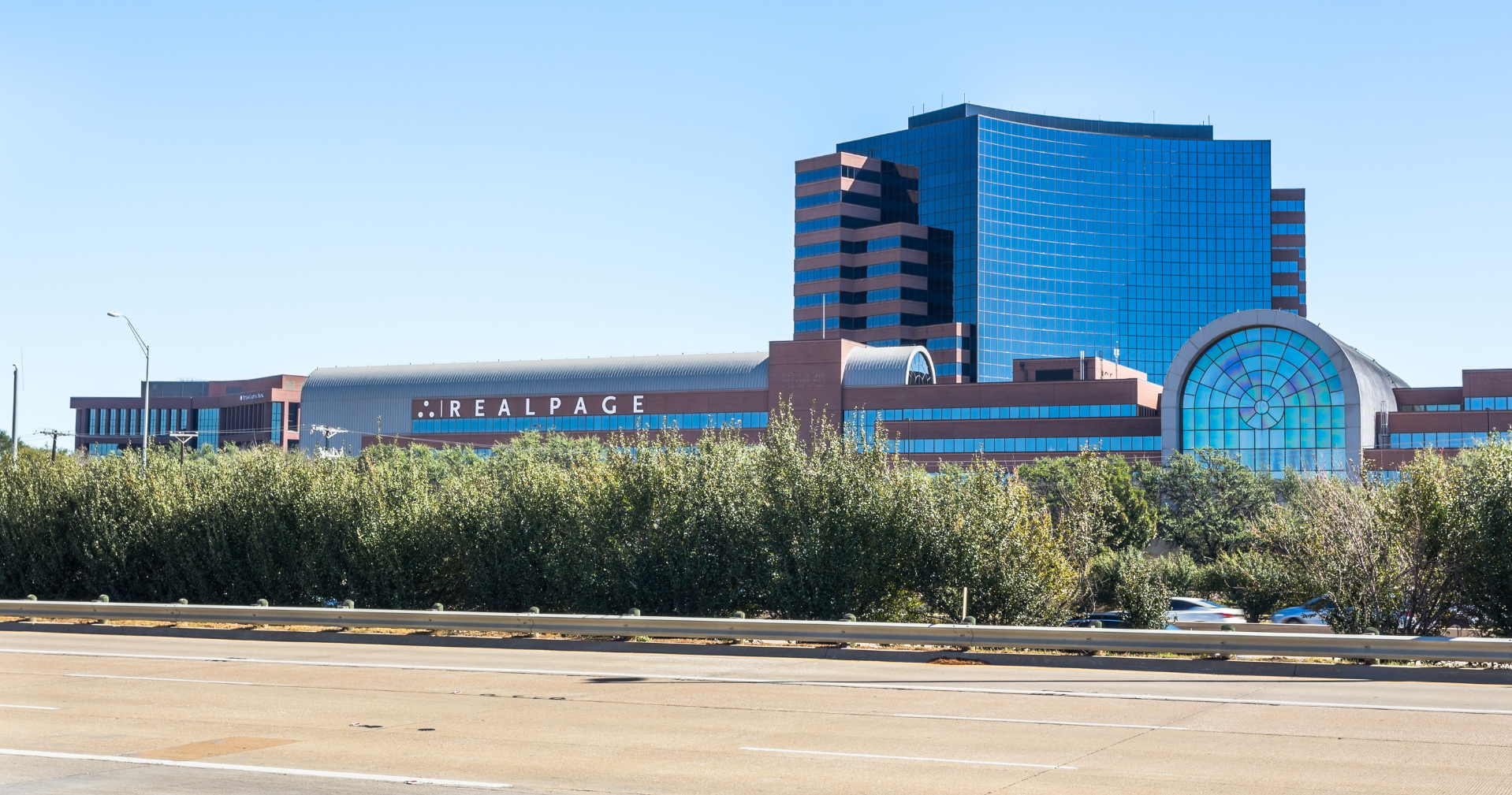
Thoma Bravo’s RealPage reaches settlement with DOJ
January 30, 2026
As 2025 came to a close, there were several key developments in legal cases regarding the Thoma Bravo-owned property management software RealPage. On November 24, 2025, the US Department of Justice announced that it had settled its lawsuit against the corporation.
The settlement has been disappointingto housing advocates and tenants who were hopeful that the DOJ would hold RealPage accountable given Attorney General Pam Bondi’s stated commitment to making anti-trust work a “priority,” in the new administration. PESP’s senior housing campaign coordinator K Agbebiyi told BisNow that the settlement amounted to a slap on the wrist and that RealPage would be allowed to continue the same rent setting practices.
Andrea Beaty, Assistant Director at the Revolving Door Project also critiqued the settlement, writing that “this settlement further underscores the vast gulf between Americans’ appetite for holding price gouging corporations accountable and the Trump administration’s pay-to-play approach to justice.”
Through this settlement, RealPage is able to operate without any admission of guilt and without facing any financial penalty. Lastly, under the DOJ settlement, RealPage can still use non-public data, as long as it is older than 12 months.
RealPage still faces over 30 class action lawsuits and lawsuits from a number of state Attorneys General.
In August 2024, the US Department of Justice announced its lawsuit against RealPage with a group of bipartisan state Attorneys General representing the states of North Carolina, California, Colorado, Connecticut, Minnesota, Oregon, Tennessee, and Washington. During the announcement of the lawsuit then Attorney General Merrick Garland stated
“We allege that RealPage’s pricing algorithm enables landlords to share confidential, competitively sensitive information and align their rents. Using software as the sharing mechanism does not immunize this scheme from Sherman Act liability, and the Justice Department will continue to aggressively enforce the antitrust laws and protect the American people from those who violate them.”
In January 2025, the Department of Justice named 6 additional defendants in the lawsuit, including the private equity landlords Blackstone, Cortland, and Greystar.
The landlords and RealPage were accused of:
- Directly communicating with competitors’ senior managers about rents, occupancy, and other competitively sensitive topics.
- Regularly conducting “call arounds” to share, and sometimes discuss, competitively sensitive information about rents, occupancy, pricing strategies and discounts
- Participating in “user groups” hosted by RealPage, in which landlords discussed how to modify the software’s pricing methodology, as well as their own pricing strategies
- Sharing information with competitors about parameters in RealPage’s software.
Cortland Management settled with the DOJ in January 2025, Greystar settled with the DOJ in August, 2025, and Blakstone’s LivCor subsidiary settled in December 2025.
In the settlement agreement, Cortland Management agreed to:
- Stop using sensitive data from its competitors to inform its pricing model.
- Not use third-party software or algorithms to price apartments, unless they do so under the supervision of a court-appointed monitor.
- Cease sharing or using any competitively sensitive data from other landlords and property managers to set rent prices or generate recommended rent prices.
As part of the agreement, Cortland was also required to allow the Attorneys General to conduct inspections to ensure Cortland’s compliance with the settlement.
In the settlement agreements with the DOJ, Greystar and Blackstone agreed to:
- Refrain from using any anticompetitive algorithm that generates pricing recommendations using its competitors’ competitively sensitive data or that incorporates certain anticompetitive features;
- Refrain from sharing competitively sensitive information with competitors;
- Accept a court-appointed monitor if it uses a third-party pricing algorithm that is not certified pursuant to the terms of the consent decree;
- Refrain from attending or participating in RealPage-hosted meetings of competing landlords; and
- Cooperate with the United States’ monopolization claims against RealPage.
On November 24th 2025, Assistant Attorney General Abigail Slater of the Justice Department’s Antitrust Division released a statement announcing its settlement with RealPage stating,
“Competing companies must make independent pricing decisions, and with the rise of algorithmic and artificial intelligence tools, we will remain at the forefront of vigorous antitrust enforcement.”
According to the Department of Justice, if approved by the court, the settlement would require RealPage to:
- Cease having its software use competitors’ nonpublic, competitively sensitive information to determine rental prices in runtime operation;
- Cease using active lease data for purposes of training the models underlying the software, limiting model training to historic or backward-looking nonpublic data that has been aged for at least 12 months;
- Not use models that determine geographic effects narrower than at a state level, which is broader than the markets alleged in the complaint;
- Remove or redesign features that limited price decreases or aligned pricing between competing users of the software;
- Cease conducting market surveys to collect competitively sensitive information;
- Refrain from discussing market analyses or trends based on nonpublic data, or pricing strategies, in RealPage meetings relating to revenue management software;
- Accept a court-appointed monitor to ensure compliance with the terms of the consent judgment; and
- Cooperate in the United States’ lawsuit against property management companies that have used its software.
Yet this doesn’t mean that investment in Thoma Bravo is without its risks. In addition to the DOJ lawsuits, dozens of landlords that have used RealPage software have been subjected to class action lawsuits. A number of those lawsuits have recently settled, resulting in Greystar and 25 other landlords paying back tenants $141 million. Greystar also recently reached a $7 million settlement with nine states that launched lawsuits against the landlord for its usage of RealPage as well. RealPage continues to be banned in over 10 major cities and is currently banned statewide in the large rental markets of New York and California. Individual states still have ongoing lawsuits against RealPage and landlords that used the software as well. Additionally, the headline risk that Thoma Bravo and RealPage face will be a tough obstacle to overcome. With over 22 states introducing over 44 pieces of legislation against RealPage this past legislative session, algorithmic rental pricing continues to remain controversial and a topic of discussion for legislators. The passage of the settlement also doesn’t ensure that high ranking politicians such as Senators Elizabeth Warren and Bernie Sanders will not continue to write public letters about RealPage’s impact on the rental market. Lastly, with Greystar, one of the country’s largest landlords, being unable to use the software as easily as before (and being dealt pricey legal repercussions), Thoma Bravo and RealPage could still be subjected to intense public scrutiny for years to come.
To read more about RealPage, check out this page on the Private Equity Stakeholder Project website.