PE Files #002: Denny’s gets scrambled into a private equity omelet
December 10, 2025
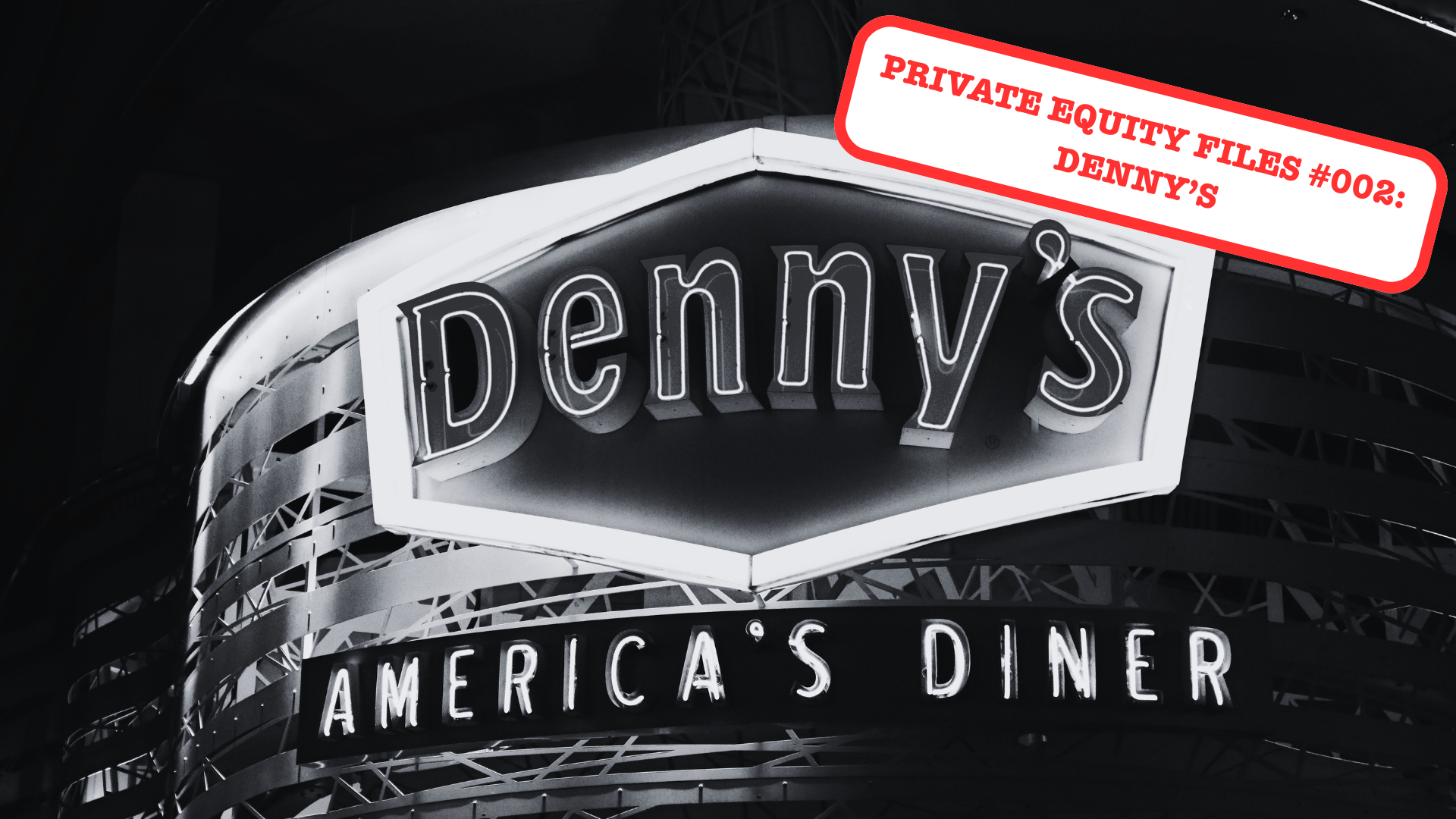
PE Files #002: Denny’s
PESP’s PE Files take a look at how portfolio companies are impacted by the private equity playbook, from beloved businesses bankrupted to mass layoffs at formerly mom-and-pop operations.
WHO: Diner chain Denny’s; private equity firms KKR, Sovereign Investment, and TriArtisan Capital Advisors; all-day breakfast lovers
WHAT: In early November, American diner chain Denny’s announced it would be sold to private equity firm TriArtisan Capital Advisors, venture capital firm Treville Capital Group, and Yadav Enterprises, Inc. and taken private in a leveraged buyout, a tactic that has been a key driver of instability at PE-owned companies. The acquisition will be financed with $335 million of debt that will be taken on by Denny’s. TriArtisan Capital isn’t the first private equity egg to be scrambled into Denny’s omelet: in the early 1990s, KKR acquired a 47% interest in Denny’s parent company, loading it with a staggering $1.25 billion of debt. In 1997, Denny’s parent company filed for bankruptcy with an astounding $2.2 billion in debt.
WHERE: Denny’s has approximately 1300 restaurants around the world, with most concentrated in the U.S.
WHY: TriArtisan indicated interest in acquiring Denny’s in the wake of the diner chain’s declining performance. In February 2025, Denny’s stock hit its lowest point in twelve years following a decline in quarterly sales, the company has explained as a result of its customers having less money to spend or feeling cash-strapped.
SO WHAT? With Denny’s sales already struggling and consumer sentiments at a low point, the debt added to the restaurant chain by this take-private deal could prove difficult to service. TriArtisan Capital has overseen two prominent restaurant chain bankruptcies in as many years: TGI Fridays and Hooters in 2024 and 2025, respectively. TriArtisan acquired TGI Fridays in 2014 through a $900 million leveraged buyout. TriArtisan loaded $670 million of debt on to the restaurant chain to complete the acquisition. A decade later, TGI Fridays filed for bankruptcy with $37 million in debt. A similar story played out at Hooters: TriArtisan purchased Hooters from private equity firm Wellspring Capital Management in 2019 in a leveraged buyout. In 2022, Hooters received $70 million in debt financing for working capital and other corporate purposes, including “distributions to its ultimate parent entity,” suggesting a potential dividend recapitalization to TriArtisan. In early 2025, Hooters filed for bankruptcy with $376 million in debt.
In both TGI Fridays and Hooters, the core revenue challenges remained constant. Rather than investing in modernization or consumer value, TriArtisan leaned on financial engineering—debt, dividend recaps, and short-term capital extraction—leaving operators with fewer resources and customers with worse service.
Restaurant rollups routinely push menu price increases and shrink staffing as early levers to service debt, at precisely the moment consumers are already pulling back on discretionary spending.
WHAT’S NEXT? If Denny’s shareholders approve the deal, the acquisition is slated to be completed in early 2026. Should TriArtisan and its partners in the Denny’s buyout follow the standard private equity playbook, it raises some concerns for workers: private equity firms often adopt a low-road approach for workers by reducing wages, benefits, and staffing levels in an effort to boost profits.
Private equity has played a disproportionately large role in U.S. bankruptcies, with startling economic implications. Although private equity accounts for 6.5% of the U.S. economy according to the primary lobby group for the industry, it was responsible for 56% of the largest bankruptcies (those involving liabilities exceeding $500 million at the time of filing) last year. Private equity-owned companies account for 11% of all bankruptcies in 2024, with a clear overrepresentation in large bankruptcies.
Large bankruptcies are particularly concerning as those tend to have an outsized impact on workers and consumers. Bankruptcies by private equity-owned companies in 2024 directly resulted in at least 65,850 layoffs across the country. In addition, private equity was overrepresented in healthcare bankruptcies, accounting for 7 of the 8 largest healthcare-related bankruptcies of the year, and 21% of all healthcare bankruptcies.
This trend raises pressing questions about the long-term consequences of private equity’s growing footprint in nearly every sector of the economy.