Updated November 2025
PESP first released a database containing information on private equity-owned companies with 10,000 or more employees in 2023. The database now includes more than 250 private equity-owned companies with 7,000 or more employees. The table below can be filtered and sorted by any of the columns such as Current Owner, Industry,or Locations Active.
Table 1
| Sector | # of Employees |
| Accommodations and Food Services | 2,313,631 |
| Retail / Wholesale Trade | 1,458,346 |
| Administrative, Support, and Security | 1,750,926 |
| Professional, Scientific, and Technical Services | 1,232,306 |
| Health Care and Social Assistance | 1,081,700 |
Table 2
| Sector | # of Companies |
| Professional, Scientific, and Technical Services | 45 |
| Health Care and Social Assistance | 44 |
| Manufacturing | 38 |
| Retail / Wholesale Trade | 34 |
| Accommodations and Food Services | 29 |
Table 3
| Firm | # of Companies | # of Employees |
| Roark | 9 | 1,276,792 |
| Warburg | 4 | 835,000 |
| 3G Capital | 2 | 537,000 |
| Apollo | 15 | 533,600 |
| Sycamore | 5 | 357,000 |
| Blackstone | 17 | 342,250 |
| KKR | 15 | 340,395 |
| Bain | 14 | 321,674 |
| Cerberus | 1 | 290,000 |
| BC Partners | 3 | 202,000 |
| Advent | 7 | 177,500 |
| Brookfield | 6 | 169,300 |
| Carlyle | 8 | 168,146 |
| TPG | 5 | 166,200 |
| Ares | 11 | 159,446 |
| Leonard | 5 | 153,660 |
According to the American Investment Council, the private equity lobbying body, private equity firms directly employ 13.3 million people in the United States alone, up from the 2020 estimate of 11.7 million (12% increase). The largest number of workers employed by private equity-owned companies are concentrated in low-wage industries such as food service, retail, home healthcare, and security.
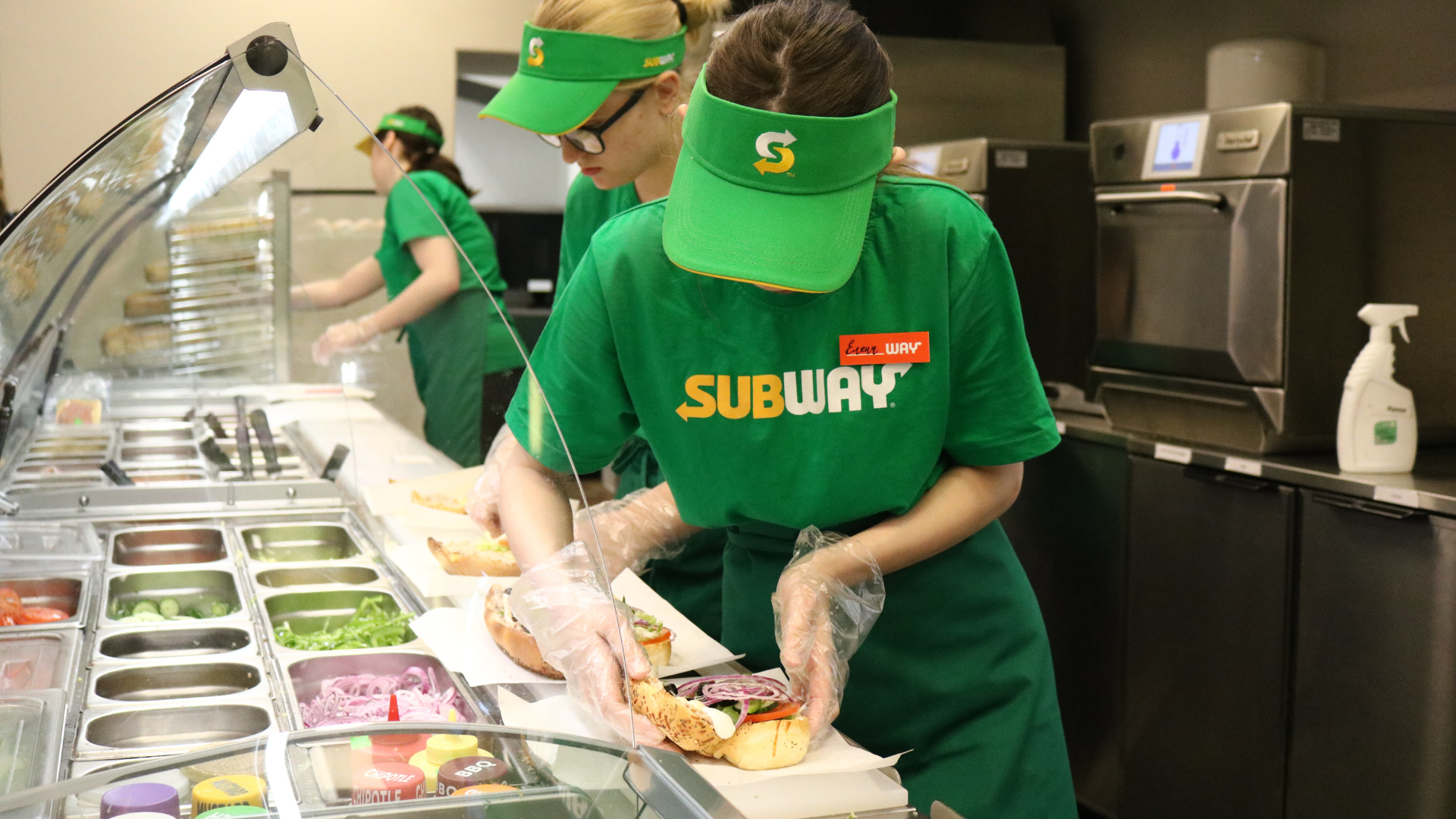
Companies in the accommodations and food service industries have nearly one million more employees than the next largest sector, retail and wholesale trade. More than one million of those working in the food service industry are employed by companies owned by Roark Capital, such as Subway, Arby’s, Dunkin Donuts, and Culver’s. These companies, on average, are larger than information technology or healthcare companies, as shown by the difference in sector size when accounting for number of employees (table 1) versus company count (table 2).
While focusing on growing cash flows at the companies they buy, private equity firms often take a low road approach and seek to reduce wages, benefits, and staffing at companies they acquire – with devastating consequences to millions of workers, their families and entire communities.
Private equity firms that have a controlling stake or board seats in the portfolio companies they own have the power to impact jobs and working conditions. Many private equity investors have recently increased efforts to ensure they are not exposed to risky private equity strategies by implementing labor standards that private equity firms must agree to before receiving their investments. Pension funds in California, New York, Illinois, and Maryland, as well as other smaller investors have recently introduced labor standards within their portfolio that include many of the key portions of PESP’s Labor Rights Platform. In response, private equity firms such as Blackstone and Apollo have introduced more limited labor standard commitments across their portfolio.
Despite these investor policy advancements, labor issues persist at private equity-owned companies. Our 2023 Private Equity Labor Scorecardunderscores a pattern of hazardous or negligent labor practices within the industry – companies owned or controlled by the eleven firms included in the scorecard paid $1.6 million in Occupational Safety and Health Administration (OSHA) fines for violations and $4.3 million for wage and hour violations at their respective portfolio companies. Beyond health and safety issues, other examples of poor labor practices at private equity-owned companies include outsourcing jobs in K-12 education, child labor at Packers Sanitation (now Fortrex, owned by Blackstone) and Hearthside Food Solutions (now Maker’s Pride, bankrupted by Charlesbank and Partners Group), union-busting at Windmill Farms (Instar) and Westinghouse (Brookfield), and inadequate staffing leading to a nurses strike at LifePoint Health (Apollo).
Bankruptcies
A PESP review found that private equity firms played a role in 70% of large U.S. corporate bankruptcies in the first quarter of 2025 alone, despite private equity making up just a fraction of the overall economy.
Joann, the fabric and craft store, filed for bankruptcy in March 2024, and it appeared that it would emerge without any major store closures or layoffs. But by January of this year, Joann filed for bankruptcy a second time and announced that it would close and liquidate, laying off 19,000 employees. The company was owned by Leonard Green and Partners, a private equity firm with a history of aggressive debt practices that have led to the failure of a number of its portfolio companies. Leonard Green and Partners was also behind the January bankruptcy of Prospect Medical Holdings and the December 2024 bankruptcy of The Container Store.
In August 2025, tween jewelry retailer Claire’s filed for bankruptcy protection for the second time. The popular store has had a relatively long history with private equity: in 2007, Apollo Global Capital purchased Claire’s for $3.1 billion in a leveraged buyout, loading the retailer with $2.5 billion of debt. Eleven years later, Claire’s filed for bankruptcy for the first time as it struggled under long-term debt, leading to a restructuring that passed the company into the hands of creditors and private equity firms Elliott Investment Management and Monarch Alternative Capital. By the time Claire’s declared bankruptcy again, the retailer had over $1 billion in liabilities. As the store initiated liquidation of its assets, private equity firm Ames Watson agreed to acquire Claire’s and keep the majority of its stores open.
The private equity tendency to focus on short-term gain rather than on longevity and growth can not only lead to bankruptcy but may indicate that long-term investments in private equity are not as lucrative as investors were promised. Between 2010 and 2020, public pension funds’ private equity investments performed worse than the S&P 500 in the same time frame.
For more on private equity bankruptcies, see the PESP Bankruptcy Tracker.
Acquisitions
In August 2025, Sycamore Partners completed its more than $22 billion acquisition of Walgreens, splitting the retail pharmacy giant into five separate businesses: Walgreens, The Boots Group, Shields Health Solutions, CareCentrix, and VillageMD. The leveraged buyout — financed with over 70% debt — has sparked widespread concern over the future of one of the nation’s most important healthcare access points. Walgreens operates thousands of U.S. pharmacies and employs more than 220,000 people domestically, serving millions of patients daily.
After months of discussions with Sycamore Partners about the buyout, Walgreens late last year announced plans to close 1,200 stores. Store closures could accelerate under Sycamore Partners’ ownership. Research shows that pharmacy closures disproportionately impact low-income, rural, and minority communities, and can create “pharmacy deserts” where patients lose access to essential medications and services.
In the food services sector, Roark Capital dominates: with its 2024 acquisition of Subway, the firm owns companies that employ more than 1.2 million people. In recent years, however, private equity heavyweight Blackstone has increased its presence in the sector through acquiring Tropical Smoothie Cafe and Subway competitor Jersey Mike’s. Both companies operate on a franchise model, which at times enables private equity firms to skirt responsibility for poor labor practices by placing blame on franchise owners.
Furthermore, Blackstone will need to remain vigilant about child labor at its new portfolio companies. As in the scandal with Blackstone portfolio company Packers Sanitation (now Fortrex), the Department of Labor identified child labor at both Tropical Smoothie Cafe and Jersey Mike’s locations in recent years. In the case of Jersey Mike’s, the DOL found that one Jersey Mike’s franchise violated labor law in 2024 “by allowing 14 minor-aged children to operate power-driven meat slicers” and work beyond the legal number of hours. A 2023 DOL investigation concluded that a Florida Tropical Smoothie Cafe franchise engaged in wage theft and scheduled minors for too many hours.
Further examples below are derived from the latest update of the largest employers data, and further illustrate the ways private equity ownership can degrade working conditions and harm workers.
Retail and Hospitality
Great Wolf Lodge
Blackstone
In 2019, Blackstone acquired a 65% stake in Great Wolf Resorts, a chain of hotels with indoor water parks in the US and Canada. The company employs 12,000 people at locations in 19 states and Ontario. Great Wolf directly owns and operates all its facilities in the US.
In the first six months of 2024, Great Wolf hired 9 union busting consultants to persuade against organizing at the Perryville, Maryland and Gurnee, IL locations.[1] According to NLRB data, there are no recognized unions at any of the Great Wolf Lodge locations in the US.
Blackstone released responsible workforce principles in August 2024. One of the ten principles laid out the firm’s stance on unionization: “cooperate with and bargain in good faith with workers who have chosen to be represented by unions. Portfolio companies should not make threats, create an atmosphere of intimidation or fear, or retaliate against employees who are exercising their right to freedom of association.” This is not the same as committing to neutrality – this language still allows for companies to hire consultants that attempt to dissuade workers from unionizing.
In contrast, the New York State Common Retirement Fund policy calls on general managers to “adopt a position of neutrality and commit to non-interference” in union drives.
David’s Bridal
With 195 locations and 7,000 employees, David’s Bridal specializes in wedding dresses and other formal wear. According to the company, about 25% of US brides wear David’s Bridal when getting married.
Despite the company’s large market share, it still struggled financially to repay debt placed on it by private equity owners, filing for bankruptcy twice within 5 years. The company first filed for bankruptcy in 2018, after more than a decade of private equity investment from Leonard Green and Partners (2007-2012) and Clayton, Dubilier, and Rice (2012-2023). After the bankruptcy, Oaktree Capital Management took over[2] the company. David’s Bridal filed for bankruptcy again in April 2023, and was then acquired by asset manager CION Investments.
Healthcare and Education
Thrive Pet Healthcare
TSG Consumer Partners
Thrive Pet Healthcare is owned by private equity firm TSG Consumer Partners, which acquired the company (then known as Pathway Pet Alliance) in 2020.[3]
Thrive is highly indebted and considered speculative and subject to very high default risk.[4] Thrive’s debt load is the result of TSG’s $2.65 billion leveraged buyout, which was financed with over $1 billion in loans[5] and brought the company’s leverage to 10x its earnings at the time of the transaction.
In downgrading Thrive’s credit rating, S&P noted that:
“the company’s financial risk profile reflects that its corporate decision making prioritizes the interests of its controlling owners, in line with our view of the majority of rated entities owned by private-equity sponsors. Our assessment also reflects private-equity owners’ generally finite holding periods and focus on maximizing shareholder returns.”
Moody’s noted that the company has attempted to reduce debt and increase its cash flow through “headcount initiatives, targeted pricing actions, and replacing its management team.”
In 2023, Thrive announced that it was closing its veterinary hospital near Rochester, NY and laying off 132 workers. The closure came just over a year after workers at the facility voted to form a union.
A former surgical care assistant for the closed hospital told NPR that Thrive neglected operations and that it “took months to get an answer to replace broken equipment or hire new staff.”
State legislator Rachel Barnhart wrote to the Federal Trade Commission (FTC) urging it to investigate Thrive for potentially anticompetitive practices and citing the agency’s broader efforts to investigate private equity in the veterinary care industry. Barnhart also noted:
“VSES staff recently unionized, something its parent company fought tooth and nail, making the timing of this announcement disturbing and suspicious. One way to bust a union is to conveniently close shop.”
Duly Health and Care
Ares Management
Duly Health and Care is a multi-specialty physician group with over 7,000 employees based in over 150 locations in the Greater Chicago area. Its operating company is owned by private equity firm Ares Management, as well as the company’s management and physicians. Ares first invested in Duly (then known as DuPage Medical Group) in August 2017 in a $1.45 billion deal financed with about 40% debt.
In early 2021 Ares loaded Duly with new debt in order to finance an over $200 million dividend payout to itself. The dividend deal came not long after Duly collected nearly $80 million in CARES Act aid.
At the time, credit rating agency Moody’s Investor Service rated the dividend recapitalization deal credit negative, noting that:
“it points to the aggressive nature of [Duly’s] financial policies, a key governance issue. DuPage will be meaningfully reducing its cash balance to fund the dividend. Combined with higher gross financial leverage, this will leave [Duly] more weakly positioned to absorb any unexpected operating setback or incremental debt. Additionally, Moody’s believes [Duly’s] aggressive policies pose social risks as key customer relations stakeholders include patients, payors and government entities.”
As of April 2024, Duly’s operating company has a Caa1-PD rating (“subject to very high default risk, and may be in default on some but not all of their long-term debt obligations”[6]).
Last year, Duly reportedly initiated multiple rounds of layoffs and compensation reductions, and eliminated its palliative medicine services.
Stepping Stones Group
Leonard Green & Partners
Leonard Green & Partners owns Stepping Stones Group, a leading provider of autism treatment and related behavioral health services for children. Its 7,500 employees provide educational, therapeutic, and nursing services in school, home, and center-based settings in almost every US state.
In 2024, Stepping Stones Group agreed to pay $4.25 million to settle a class action lawsuit alleging widespread wage and hour violations, including failure to pay all minimum wages, failure to provide meal periods or pay for missed meals, failure to provide rest periods, untimely payment of wages, and other claims. Despite agreeing to settle, Stepping Stones Group denied all claims and maintains that it has fully complied with the law.
Agriculture and Infrastructure
Grimmway Farms
Teays River Investments
Grimmway Farms is the largest carrot grower in the world and was acquired by private equity firm Teays River Investments in early 2021.
The farm settled a lawsuit accusing their ESG report of false advertising after losing a legal argument that the ESG report is not covered by California’s anti-SLAPP lawsuit in 2023.
Since acquisition by Teays River, the company was fined over $59,000 in Federal OSHA fines over seven violations, including at least three involving a worker death. Two of those seven violations have been contested and the cases remain open.
In at least one of those cases, Grimmway contractors were also fined. In 2023, farm laborer Rosa Sanchez died on the job after “Employees were permitted to perform work functions, such as harvesting operations in close proximity to a Commercial Truck being driven in an unsafe manner. . . . Witnesses said they became further incensed when they were told to get back to work while Sanchez’s body lay in the field under a yellow covering while awaiting an ambulance.”
Genesee & Wyoming
Brookfield Asset Management, Government of Singapore Investment Corporation
Genesee & Wyoming is a railroad operator with lines that go through the United States, Canada, Mexico, and several European countries. 7,300 people work for the company as conductors, engineers, mechanics, and more. Brookfield Asset Management and GIC acquired the company in 2019.
In June 2023, Genesee & Wyoming fired more than 30 employees one month after they formed a union. The Teamsters protested and sued Genesee & Wyoming in June 2023. The parties settled in 2024. In September 2024, dispatchers at the company’s St. Albans, Vermont location unionized with the American Train Dispatchers Association.
Manufacturing
BlueTriton Brands (Arrowhead, Poland Spring, Pure Life)
CFT Capital Partners, Metropoulos & Company, Farol Asset Management, One Rock Capital Partners
BlueTriton Brands is owned by Metropoulos & Company and One Rock Capital Partners. The group acquired the company in 2021. The company, spun out of Nestle, is a North American producer of bottled water.
Since being acquired by Metropoulos & Company and One Rock Capital Partners, OSHA has recorded 9 serious OSHA violations, 4 of which involved amputations or risk of amputation.[7]
July 2024 update
In 2023, PESP released a database containing information on 200+ private equity-owned companies with 10,000 or more employees. The table above can be filtered and sorted by any of the columns such as Current Owner or Industry – 2024’s update also includes Locations Active. Texas has the highest number of large private equity-backed companies, followed by Florida and California. Excluding the United States, where 186 of the 206 companies in the database have locations, Canada, the United Kingdom, and Germany have the greatest number of companies represented.
The data from this year shows an overall increase in the number of employees at the largest private equity-owned companies in the world. Professional, Scientific, and Technical Services saw the largest increase in employees, with recent acquisitions like NexTech and Guidehouse driving the change. Japan Industrial Partners’ September 2023 acquisition of Toshiba accounted for the significant growth in the Manufacturing sector.
While Retail/Wholesale Trade remains the second-largest sector, it had the greatest loss in employee numbers. Some of this drop-off can be attributed to bankruptcies. The 99 Cents Only Stores bankruptcy led to layoffs for 14,000 employees. Joann also went bankrupt in the last year while majority-owned by Leonard Green & Partners – though creditors have been able to keep the craft stores open, the 18,000 employees are no longer under private equity ownership.
| Sector | 2023 | 2024 | Difference |
| Accommodation & Food Services | 2,418,414 | 2,463,692 | 45,278 |
| Retail / Wholesale Trade | 1,609,997 | 1,509,313 | -100,684 |
| Administrative, Support, & Security | 1,236,000 | 1,287,000 | 51,000 |
| Health Care & Social Assistance | 1,020,076 | 995,800 | -24,276 |
| Professional, Scientific, & Technical Services | 826,500 | 1,061,844 | 235,344 |
| Manufacturing | 642,740 | 839,306 | 196,566 |
| Waste Management & Remediation Services | 240,500 | 205,000 | -35,500 |
| Arts, Entertainment, & Media | 224,520 | 176,243 | -48,277 |
| Finance & Insurance | 183,964 | 188,964 | 5,000 |
| Transportation & Warehousing | 163,000 | 200,000 | 37,000 |
| Other Services | 119,000 | 134,000 | 15,000 |
| Educational Services | 94,992 | 85,173 | -9,819 |
| Construction and Mining | 83,000 | 82,000 | -1,000 |
| Real Estate | 52,000 | 52,000 | 0 |
| Total | 8,914,703 | 9,280,335 | 365,632 |
| Country | # Companies |
| United States | 186 |
| Canada | 60 |
| United Kingdom | 49 |
| Germany | 41 |
| Mexico | 41 |
| France | 37 |
| Spain | 36 |
| India | 35 |
| Italy | 33 |
| Japan | 30 |
| China | 28 |
| Netherlands | 28 |
Scroll through the visualizations below to see sector and firm-level data on the largest private equity employers. Some NAICS categories have been combined to simplify the visualizations (ex: Retail Trade and Wholesale Trade).
[1] Reports are filed for the previous quarter.
[2] See pdf here: https://archive.md/T0En8
[3]https://www.tsgconsumer.com/news/tsg-consumer-partners-acquires-pathway-vet-alliance
[4]Moody’s Investors Service’s most recent rating (January 2024) gives Thrive a Corporate Family Rating (CFR) of Caa1 and a Probability of Default Rating (PDR) of Caa1-PD. S&P’s most recent rating for Thrive (April 2024) is CCC+.
[5] See pdf here: https://drive.google.com/file/d/1OvBflS18xPExFr6811hMmftsKziUzBgX/view?usp=sharing
[6]https://ratings.moodys.com/api/rmc-documents/53954 pg. 14.
[7]https://www.osha.gov/ords/imis/establishment.inspection_detail?id=1737899.015
https://www.osha.gov/ords/imis/establishment.inspection_detail?id=1764538.015
https://www.osha.gov/ords/imis/establishment.inspection_detail?id=1702846.015
https://www.osha.gov/ords/imis/establishment.inspection_detail?id=1705298.015
https://www.osha.gov/ords/imis/establishment.inspection_detail?id=1576813.015
https://www.osha.gov/ords/imis/establishment.inspection_detail?id=1601071.015
Email [email protected]with questions, corrections, or other comments.
To access the full database, click here.