
Private equity’s AI gold rush comes at a cost
August 14, 2026
The AI Infrastructure Gold Rush Is Becoming a Private Equity Gold Rush—and Communities Will Bear the Costs
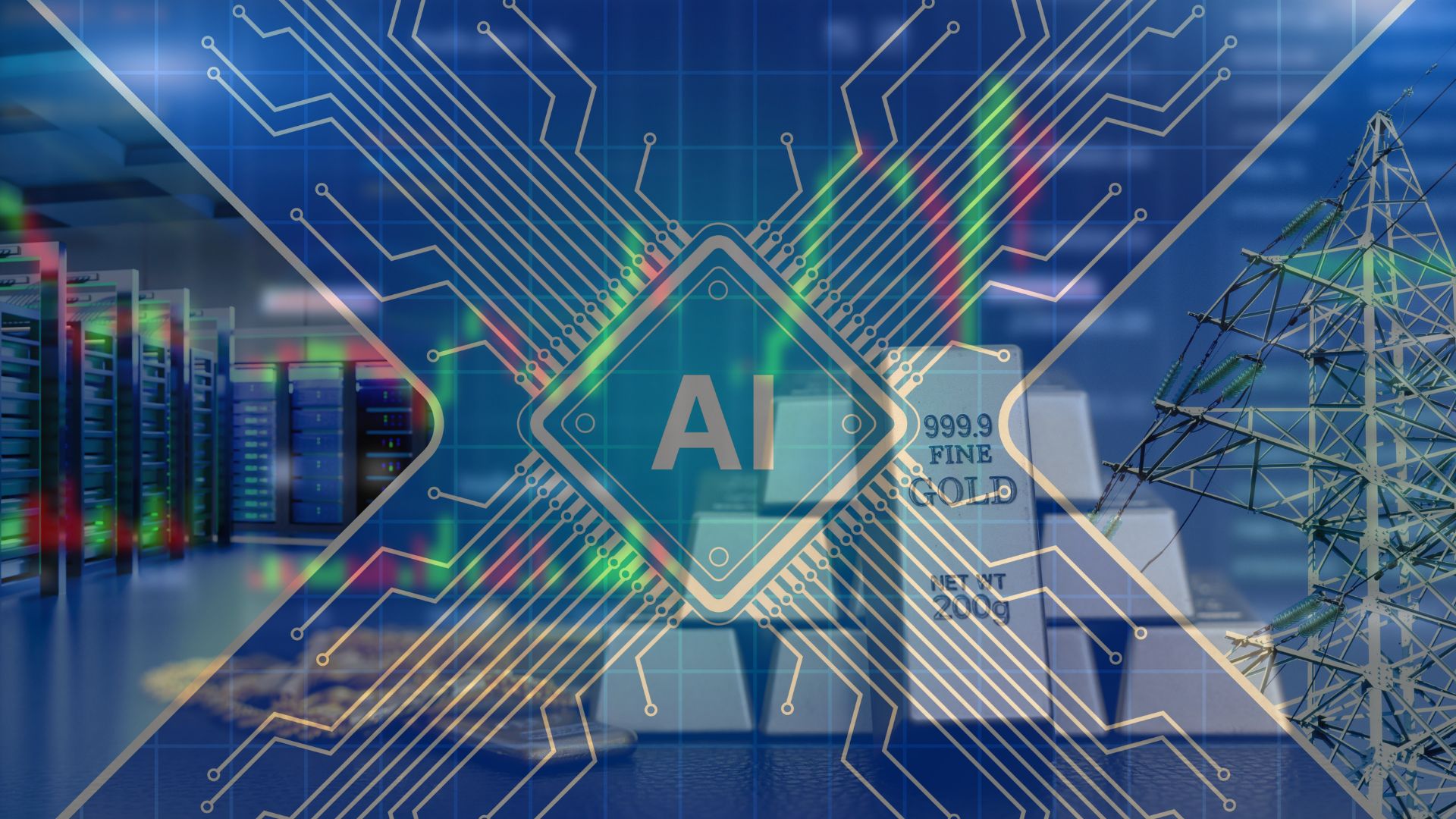
Everyone is discussing AI. Behind every AI model, however, lies a rapidly expanding physical infrastructure: massive data centers, power plants, transmission lines, water systems, and industrial facilities that require unprecedented amounts of electricity and water. Often, datacenter owners also seek and receive public subsidies and tax rebates for their profitable projects.
As the buildout of AI infrastructure accelerates, another trend is unfolding largely outside public view. According to recent reporting in the Wall Street Journal, data center developers are increasingly selling majority stakes in their projects to private equity firms and other large financial investors, bringing billions of dollars of institutional capital into the sector. Because private equity is also buying power generation and transmission assets, they have the potential for significant control in this sector. For example, KKR is supplementing investments in power generation with data center investments globally and is said to be exploring data centers in the US. Similarly, Blackstone and BlackRock have announced significant data center investments in recent months. As KKR has noted, “owners who control grid access and have full permits have an advantage” as datacenter owners and resource scarcity can be a limiting factor for the construction of other datacenters.
The implications of private equity’s role in datacenter development and ownership could have profound implications for climate justice, energy affordability, and democratic accountability.
AI infrastructure is climate infrastructure
Data centers are often described as digital infrastructure, but they are equally energy infrastructure.
Large-scale AI facilities require enormous and continuous electricity supplies, driving demand for new generation, expanded transmission, and grid upgrades. In many regions, this demand is already prolonging the operation of aging fossil fuel power plants, delaying coal retirements, expanding natural gas generation, and increasing pressure to construct new fossil fuel infrastructure.
These decisions are not merely technical. They shape whether communities experience cleaner air or continued pollution, whether utilities invest in renewable energy or fossil fuels, and whether climate commitments become more difficult to achieve.
AI infrastructure is increasingly becoming one of the major drivers of future energy demand. That makes decisions about who finances and owns this infrastructure central to the climate transition.
Ownership shapes outcomes
Investments in long-lived fossil fuel assets raise important questions about whether financial strategies are aligned with the rapid emissions reductions needed to address the accelerating climate crisis while also serving the long-term public interest. The concern is that ownership structures influence how decisions are made and whose interests are prioritized. Many private equity firms maintain substantial ownership stakes in fossil fuel generation and energy infrastructure. As demand for AI and data centers grows, these existing investments may create incentives to expand or prolong the use of carbon-intensive energy assets instead of prioritizing clean energy deployment.
Private equity investment structures can create a mismatch between relatively short fund-level investment horizons and the decades-long operating lives of utility infrastructure; the OECD notes that some PE-style infrastructure funds operate with investment holding periods of only four to five years.Private equity firms typically seek higher returns over shorter investment horizons than traditional utility or infrastructure investors. Those incentives can encourage rapid expansion, aggressive financial engineering, cost reduction, and accelerated asset monetization.
When these incentives intersect with essential infrastructure, communities are vulnerable to being burdened with the consequences.
Utility customers may face higher electricity costs as billions of dollars in new AI-related infrastructure investments are incorporated into rate bases. Local residents may confront increased water consumption, land-use conflicts, increased use of diesel powered backup generators during power disruptions, and prolonged reliance on fossil fuel facilities needed to meet electricity demand for data centers. Workers and nearby neighborhoods frequently shoulder the environmental and public health burdens associated with rapid industrial development. Communities are already learning that having a datacenter as a neighbor can lead to increased emissions of pollutants that are linked to asthma and other health issues.
These impacts are not distributed equally.
Climate justice cannot be an afterthought
Across North America, proposed data centers are increasingly concentrated in communities already burdened by industrial pollution, aging infrastructure, and environmental injustice.
Many of these communities have spent decades living near power plants, pipelines, compressor stations, and heavy industrial facilities. The rapid expansion of AI infrastructure risks reinforcing these inequities if decision-makers continue to prioritize speed and financial returns over meaningful community engagement and environmental protection.
Misalignment in priorities between private equity and community interest raise key questions around these projects. Some questions for consideration include:
- Who benefits economically from AI infrastructure?
- Who bears the environmental costs?
- Who pays for the necessary grid upgrades?
- Whose water resources are being consumed?
- Which communities are exposed to additional pollution?
- Who has meaningful input into decisions that reshape their neighborhoods?
These questions are often absent from conversations centered exclusively on technological innovation or investment returns.
Financial ownership is becoming a climate issue
Private equity is already a major owner of fossil fuel infrastructure.
The Private Equity Stakeholder Project’s (PESP) research has documented how some of the world’s largest private equity firms own hundreds of fossil fuel assets whose combined greenhouse gas emissions rival those of major industrialized countries. These investments influence emissions trajectories, energy markets, and climate risk across the global economy.
Now, many of the same financial actors are expanding their presence in AI infrastructure.
This convergence matters because AI’s unprecedented electricity demand will increasingly determine future energy investment decisions. Whether that demand accelerates renewable energy deployment or prolongs dependence on fossil fuels will depend not only on technology, but also on ownership, governance, and financial incentives.
Ignoring who owns AI infrastructure means overlooking one of the most important drivers of future climate outcomes.
Investors, regulators, and policymakers have a role to play
As private equity expands into AI infrastructure, investors, regulators, and policymakers should ask whether existing governance frameworks are sufficient for assets that increasingly function as essential public infrastructure.
Greater transparency around energy use, emissions, water consumption, community impacts, political engagement, and climate transition planning will become increasingly important as institutional investors finance the physical systems supporting the digital economy.
Likewise, regulators evaluating utility investments, transmission planning, and infrastructure approvals should consider not only whether projects are economically viable, but also whether ownership structures promote long-term public value, affordability, environmental responsibility, and accountability.
Building AI should not come at the expense of climate justice
The race to build artificial intelligence is simultaneously becoming a race to build—and own—the infrastructure that powers it.
Who owns that infrastructure will influence energy systems, climate outcomes, utility costs, and community well-being for decades to come.
The conversation cannot be limited to technological innovation or financial opportunity. It must also include climate justice, democratic accountability, and the public interest.
Digital infrastructure should be governed in ways that protect communities, create high-road careers, accelerate the clean energy transition, and ensure that the benefits of innovation do not come at the expense of those who have historically borne the greatest environmental burdens.
The future of AI is not only a question of computing power. It is also a question of power—who owns it, who profits from it, and who pays the price.
KKR illustrates a broader shift
One of the firms highlighted in recent reporting is KKR, which has become increasingly active in digital infrastructure to support the buildout of AI. Along with other large private equity firms, KKR is investing across data centers, energy infrastructure, and the systems contributing to the rapid growth of artificial intelligence.
These investments alongside private equity’s existing footprint in the energy sector, paint a more consequential picture.
PESP’s research has documented KKR’s ownership of fossil fuel assets through its energy portfolio, illustrating how private equity firms increasingly influence both the supply of energy and the infrastructure that consumes it. As investors promote new AI aspirations, firms with investments spanning data centers and fossil fuel infrastructure occupy an increasingly influential position in determining how that demand is met.
This convergence raises important questions. Will the expansion of AI infrastructure accelerate investments in renewable energy, storage, and grid modernization? Or will growing electricity demand reinforce dependence on fossil fuel generation? How will investment decisions account for climate commitments, community impacts, and affordability?
Private equity ownership is not inherently incompatible with critical infrastructure. However, ownership carries responsibility for the investment choices that follow. As private equity firms increasingly influence the development of AI infrastructure and the energy systems that power it, they face a choice between investment pathways: one that supports grid modernization, renewable energy, and long term resilience, and another that extends dependence on long lived fossil fuel infrastructure. Those choices have meaningful consequences for greenhouse gas emissions, energy affordability, public health, and the communities that bear the costs of infrastructure development. Evaluating these investments therefore requires looking beyond financial returns to whether they are consistent with climate science, the public interest, and a just energy transition.