
PESP at Climate Week 2026: Private Equity and AI
October 13, 2026
New York Climate Week and the high-level week of the 81st United Nations General Assembly took place amid an increasingly fractured geopolitical landscape. Conflict, energy and food security, tensions between major powers, and growing concern about artificial intelligence competed with the climate crisis for global attention.
Yet across the week, one reality was difficult to miss: the systems powering the global economy are changing rapidly, and decisions being made today about who finances, owns, and controls new energy infrastructure will shape climate outcomes for decades.
For the Private Equity Stakeholder Project (PESP), Climate Week reinforced the urgency of bringing private markets into that conversation.
Just before Climate Week, PESP, Americans for Financial Reform Education Fund, and Global Energy Monitor released the 2026 Private Equity Climate Risks Scorecard, the most comprehensive edition of the Scorecard to date. It examines the energy holdings and climate policies of 20 private equity firms managing a combined $7.3 trillion in assets and significantly expands previous analyses to include pipelines, LNG tankers, coal terminals, and oil- and gas-fired power generation.
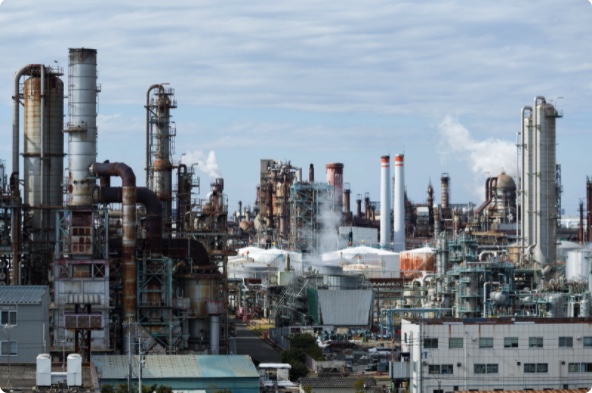
The findings illustrate the scale of private equity’s role in the energy system: the firms back at least 244 energy companies operating more than 1,050 fossil fuel assets, including more than 250 oil and gas fields, 15,000 miles of pipelines, 35 LNG terminals, 13 coal terminals, and hundreds of fossil fuel power plants. Their energy portfolios produce an estimated 1.5 gigatons of greenhouse gas emissions annually. This footprint, if compared with countries’ fossil fuel emissions, would rank behind only China, the United States, India, and Russia.
Those findings provided an important backdrop to PESP’s conversations throughout Climate Week.
Climate remained urgent, even when it wasn’t always at the center.
Climate Week unfolded alongside a UN General Assembly dominated by conflict, geopolitical fragmentation, security concerns, and debates about the future of multilateral cooperation. At the close of the General Debate, the UN noted that peace had been the overriding theme across six days of speeches, with conflicts in the Middle East, Ukraine, Sudan, Myanmar, and elsewhere commanding substantial attention.
Climate nevertheless remained a significant part of outgoing UN Secretary-General António Guterres’ final General Assembly agenda. At a September 23 High-Level Event on Climate Action and Just Transition, the UN brought together governments, financial institutions, businesses, and civil society around accelerating climate action, clean energy, resilience, and a just transition.
Guterres also called on governments to develop national plans for transitioning away from fossil fuels aligned with 1.5°C, with timelines and protections for affected workers and communities, while arguing that those responsible for pollution should bear its costs
AI was everywhere.
If one issue seemed to cut across nearly every corner of Climate Week this year, it was artificial intelligence.
AI appeared in discussions about climate technology, grid reliability, electricity demand, energy security, financing, and economic growth. At the same time, advocates and communities raised concerns about the environmental consequences of the rapid data center buildout and the impacts to fenceline communities , including potential strains on local electricity and water systems and the potential for increased reliance on fossil fuels. Climate Week demonstrations in New York uplifted community concerns about the environmental footprint of AI and data center development and concerns about the use of AI in public schools.
The 2026 PECR Scorecard shows why private equity needs to be part of this discussion.
But private equity’s role does not stop at the data center door.
Some firms are positioning themselves across multiple parts of the AI supply chain including data centers, utilities, power plants, pipelines, and other energy assets. The Scorecard notes that the AI buildout drives increased power demand while private equity and infrastructure firms race to acquire power assets and utilities and finance new generation.
That convergence was one of the central issues PESP brought to Climate Week.
AI infrastructure is Climate Infrastructure.
One message PESP emphasized throughout the week was straightforward: data centers cannot be understood simply as digital infrastructure. This issue is so much bigger and multifaceted than this.
AI facilities require enormous and continuous supplies of electricity. Meeting that demand can require new power generation, transmission, substations, pipelines, grid upgrades, and other infrastructure designed to operate for decades.
Depending on the decisions made today, that demand could support expanded clean energy deployment—or create new incentives to build gas generation and extend the operating lives of existing fossil fuel assets.
PESP’s research has already documented how the AI infrastructure boom is intersecting with private equity ownership across energy systems. The consequences of that intersection extend beyond greenhouse gas emissions to questions of electricity affordability, water consumption, land use, local air pollution, and the impacts on workers and communities living near data centers and related infrastructure.
This makes ownership a climate issue.
We need to understand who owns the infrastructure, who finances it, how investment decisions are being made, and with whom the financial and environmental risks ultimately land.
The Costs are Already Visible
The 2026 Scorecard also underscores why these questions cannot be reduced to emissions alone.
In the United States, air pollution associated with the private equity-backed extraction, coal, and LNG infrastructure analyzed by the consortium is linked to at least 1,000 premature deaths, 1,400 additional emergency room visits, 584,000 instances of asthma symptoms, 3,700 cases of asthma onset, and 27,000 lost workdays each year.
Those outcomes illustrate what is at stake when discussions about infrastructure development focus on capital deployment without equally considering impacts to the communities surrounding the assets.
That was an important theme in PESP’s Climate Week conversations, including discussions with organizations examining the consequences of the AI buildout. PESP brought a cross-sectoral lens connecting AI infrastructure, private capital, fossil fuel generation, utility ownership, affordability, workers, and frontline communities.
It is precisely this connection that can disappear when AI is discussed solely as a technology issue or electricity demand is discussed only as a grid-planning problem.
There is a financial accountability question, too.
The 2026 Private Equity Climate Risk analysis examined 145 private equity oil and gas funds that have largely completed their investment lifecycles. Investors contributed $190.4 billion to those funds and received $192.9 billion back. The median fund returned just 2 percent more than investors contributed, and after adjusting for inflation, investors lost money on average.
This matters because public pension funds and other institutional investors provide much of the capital flowing into private markets.
The question for those investors is therefore not only whether their private equity managers’ energy investments align with their climate commitments. It is also whether taking on long-term climate, transition, regulatory, and stranded-asset risks is delivering sufficient financial value for beneficiaries.
That question becomes increasingly important as private capital pours into AI infrastructure.
Data centers, power plants, pipelines, and utility infrastructure can have operating lives extending decades beyond a private equity fund’s typical ownership period. If expectations about future AI demand prove overly optimistic, institutional investors, utilities, customers, and communities could be left exposed to infrastructure built around assumptions that did not materialize.
Bringing ownership into the Climate Week conversation
PESP’s experience at Climate Week reinforced the value of connecting conversations that are often happening separately.
In discussions with environmental,climate, and community organizations and other environmental and climate focused organizations, we heard interest in examining the AI buildout as a cross-sectoral climate and environmental justice issue.
At New York Climate Week, PESP brought a private-markets and ownership lens to climate and energy conversations, connecting questions of emissions and infrastructure to who owns and finances these assets, who benefits, and who bears the risks and costs. We highlighted the growing role of private equity in utilities, energy infrastructure, and the AI and data center buildout, while emphasizing implications for energy affordability, fossil fuel dependence, environmental justice, and frontline communities. PESP also elevated the role of pension funds and other institutional investors in strengthening accountability and climate expectations for private-market managers. Overall, PESP helped connect climate, private capital, infrastructure, affordability, and community impacts in conversations where these issues are often considered separately.
That perspective also creates opportunities for deeper collaboration among organizations working on climate, financial accountability, environmental justice, energy affordability, labor, utility regulation, and technology policy.
The central questions are what gets built, what remains operating because of that investment, who controls the infrastructure, who receives the financial benefits, and who carries the risks.
The next phase of climate accountability must include private markets.
The 2026 Scorecard points toward several areas where greater accountability is needed: disclosure of fossil fuel holdings and emissions, science-based climate targets, portfolio-wide transition planning, attention to environmental justice impacts, and greater transparency around political spending and climate lobbying. It also calls for institutional investors and regulators to demand stronger disclosure and accountability from private fund managers.
Climate Week reinforced why those expectations matter.
Electrification is accelerating. AI is reshaping forecasts for electricity demand. Enormous amounts of private capital are flowing toward data centers, utilities, power generation, and other energy infrastructure. Meanwhile, communities are confronting questions about affordability, pollution, water, land, reliability, and whether they have a meaningful voice in decisions that will reshape their local economies and environments.
Private equity increasingly sits at the intersection of these trends.
PESP left Climate Week with strengthened relationships across the climate, environmental justice, investor, research, and policy communities—and with an even clearer case for making private markets accountability part of the broader climate conversation.
Climate accountability cannot stop at publicly traded companies. AI is not only a digital technology issue; it is also an energy, infrastructure, finance, affordability, and environmental justice issue. Energy policy cannot ignore financial ownership. And discussions about infrastructure investment cannot focus exclusively on how quickly capital can be deployed.
As trillions of dollars flow into the infrastructure that will power the coming decades, we need to follow the money as closely as we follow the emissions.
Because the future of AI and the energy transition is also a question of power: who owns it, who profits from it, who pays for it, and who gets a say in what comes next.
Read the 2026 Private Equity Climate Risks Scorecard.